Grants for muralists and public art funding: who pays for walls, and how to get it
The six sources of money for murals – percent-for-art, city programmes, BIDs, foundations, brands and festivals – what each one wants in a proposal, how to budget a wall for a funder, and where to find the calls.
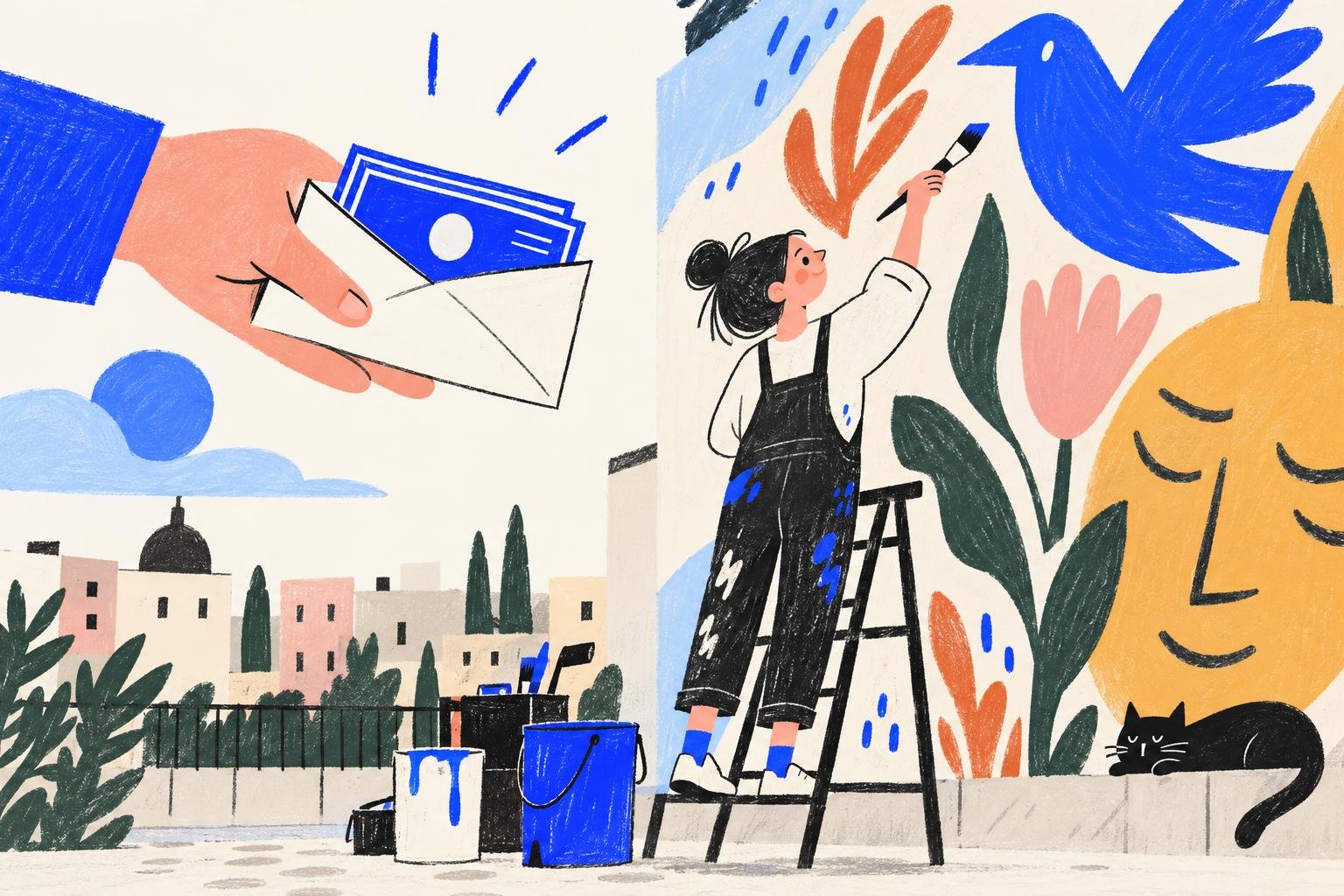
Short answer: murals are funded by six kinds of money: percent-for-art schemes that set aside part of a construction budget, city and state mural programmes, business improvement districts and neighbourhood groups, private foundations, brands and property owners, and festivals that host you. Each one asks for the same three things in different words: a design the site will accept, a budget that adds up, and proof you have painted at this scale before. Find the calls you are eligible for, price the wall honestly, and apply to several at once.
Where mural money comes from
Percent-for-art programmes. Many cities and states require that a share of public construction budgets, often around one percent, goes to art on or near the building. These are commissions with formal calls, a shortlist, a design fee and a contract. The largest and slowest money.
City and state mural programmes. Dedicated funds for walls in a city, sometimes tied to anti-graffiti, placemaking or heritage goals. Smaller amounts, faster decisions, usually open only to artists living in the area.
Business improvement districts and neighbourhood associations. Local bodies that fund walls to make a street look cared for. Often found by walking in and asking rather than by open call.
Private foundations. Arts and community foundations that fund public art projects, usually with a community-engagement angle. Read their past grants; they repeat themselves.
Brands and property owners. Developers, hotels, paint manufacturers and retailers pay for walls that make them look good. Not grants, but money, and often the best-paid work; the pricing logic is in How much to charge for a mural.
Festivals. Hosted walls with travel, materials and a fee. The selection logic is in How to get into a mural festival.
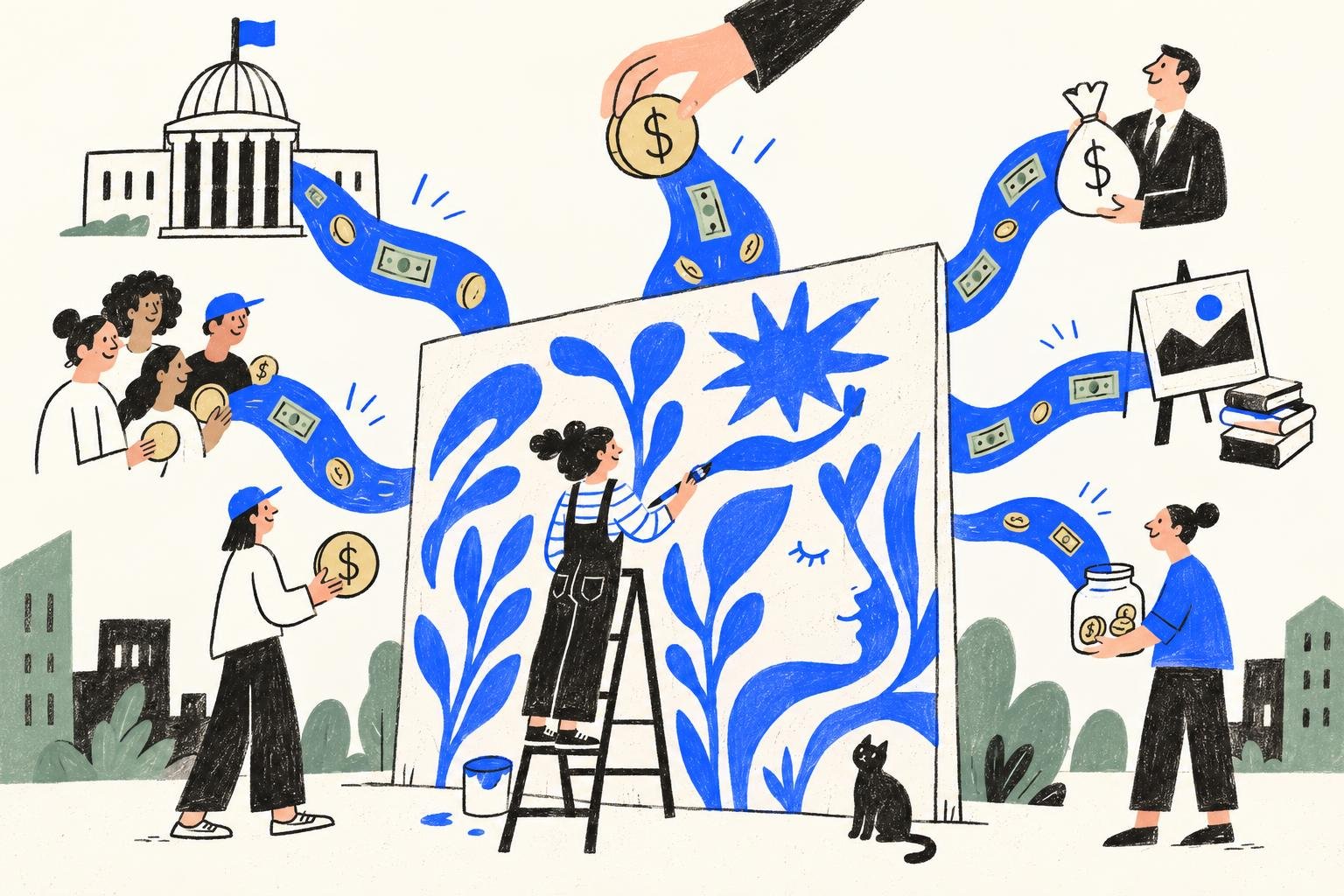
Nobody funds a mural somewhere. They fund a named wall, with the owner's signature and a budget that adds up.
What every mural funder wants to see
A site, or a plan to find one. A grant for "a mural somewhere" rarely wins. A grant for a named wall with the owner's written permission usually does. If you do not have a wall, the proposal should say how you will secure one and by when.
A design the site will accept. Funders are answerable to the public. A concept with a palette, a theme and an example of your finished walls is enough at application stage; some calls want a sketch at the wall's proportions.
A budget that adds up. Artist fee, design fee, paint and primer, access equipment, insurance, travel, anti-graffiti coating, documentation, contingency. Line by line. A worked example is in How to write an art grant proposal; the paint line comes straight from the mural paint calculator.
Proof of scale. Photos of finished walls with their sizes. A funder paying for a four-storey facade wants to see that you have painted at least a two-storey one.
Community engagement, where it applies. City and foundation money often requires workshops, consultation or local participation. Propose something you will actually do.
Maintenance. Who looks after the wall for five years, and what it costs. Mentioning it puts you ahead of most applicants.
Why mural grants get rejected
The same reasons as every other grant, plus two of their own. Eligibility first: wrong city, wrong career stage, applying as an individual when the call wants an organisation. Then a missing wall: no site, no permission, no plan to get either. Then an unrealistic schedule: a 15-metre facade in a weekend, or a design that needs a projector and a dark street in a city that only allows daytime work. The last one is why muralists who plan and transfer with a VR headset mention it in the proposal: it works in daylight, keeps its place across days, and makes the timeline believable. The methods are compared in How to scale a mural.

Step 1 – Decide which money fits the wall you want
A community wall in your own city: local programme, BID, foundation. A large facade: percent-for-art or a developer. A wall abroad: festival or residency. Each has its own call cycle.
Step 2 – Secure the wall, or the path to it
A letter from the owner saying yes in principle turns a wish into a project. Get it before you write.
Step 3 – Price the job properly
Your day rate times days on the wall, plus everything the wall needs, plus contingency. Funders can tell an invented number from a built one.
Step 4 – Write the proposal in the funder's words
If the programme talks about placemaking, heritage or youth engagement, say how your wall does that, in one paragraph, honestly. Then the design, the budget, the timeline, the maintenance plan.
Step 5 – Attach walls, not canvases
Ten photos of finished walls, from the street, with sizes. A short CV with commissions and public art at the top; the format is in Artist CV template.
Step 6 – Apply to several, track, follow up
Mural funding is seasonal and slow. Keep a list of calls, deadlines and results, and ask unsuccessful funders what would have made the difference. They usually tell you.
Where to find mural grants and public art calls
City and state arts agencies publish their own calls; percent-for-art commissions appear on public procurement portals and public art network sites; foundations list theirs on their own pages; festivals announce on social media. Reading all of them every week is a part-time job, which is why Sketchar built Artists Agent: grants, open calls, residencies and festivals in one list, filtered by country, medium, type and deadline, matched to your profile, with mural and street art as first-class mediums. Exploring is free and needs no account.
FAQ
Are there grants for mural artists? Yes: city and state mural programmes, percent-for-art commissions, foundation public-art grants, business improvement districts and festivals. Most are limited to artists living in the area or require a secured wall.
How do I get funding for a mural? Find a wall and get the owner's permission, price the job line by line, choose the funding source that fits the wall and your eligibility, and apply with photos of finished walls and a realistic timeline.
What is percent-for-art? A rule in many cities and states that a share of public construction budgets, often around one percent, is spent on art for the building or site. The commissions are published as open calls and awarded through a shortlist.
How much do mural grants pay? Community programmes commonly cover materials and a modest fee; percent-for-art and developer commissions pay a full artist fee plus production. The range is wide; price your proposal from your costs, not from the grant's maximum.
Can I get a grant to paint a mural on my own building? Sometimes, through local facade or neighbourhood programmes, but most public funding requires public benefit and a site the public can see. Check the programme's eligibility.
Where do I find public art calls? Arts agency sites, procurement portals, foundation pages, and Artists Agent, which combines them and filters by your eligibility.
Walls, and the money to paint them. Artists Agent lists mural grants, public art commissions, festival calls and residencies, filtered by your country and medium, and drafts the opening of your application from your CV. Free to explore, no signup. Find mural funding
▋