Artist CV: what to include, what to leave out, and a template juries expect
The standard artist CV format for grants, residencies and open calls: section order, how to list shows and commissions, what to do with gaps, a copy-and-fill template, and the two-page rule.

Short answer: an artist CV is a two-page list, newest first, of your exhibitions, commissions, residencies, awards, education and press, in that order unless a call says otherwise. No photo, no paragraphs, no skills list, no job history outside art. Dates on the left, facts on the right, every entry in the same format. Keep one master CV with everything and cut it to two pages for each application. The template is at the end; fill it from the top.
What an artist CV is, and what it is not
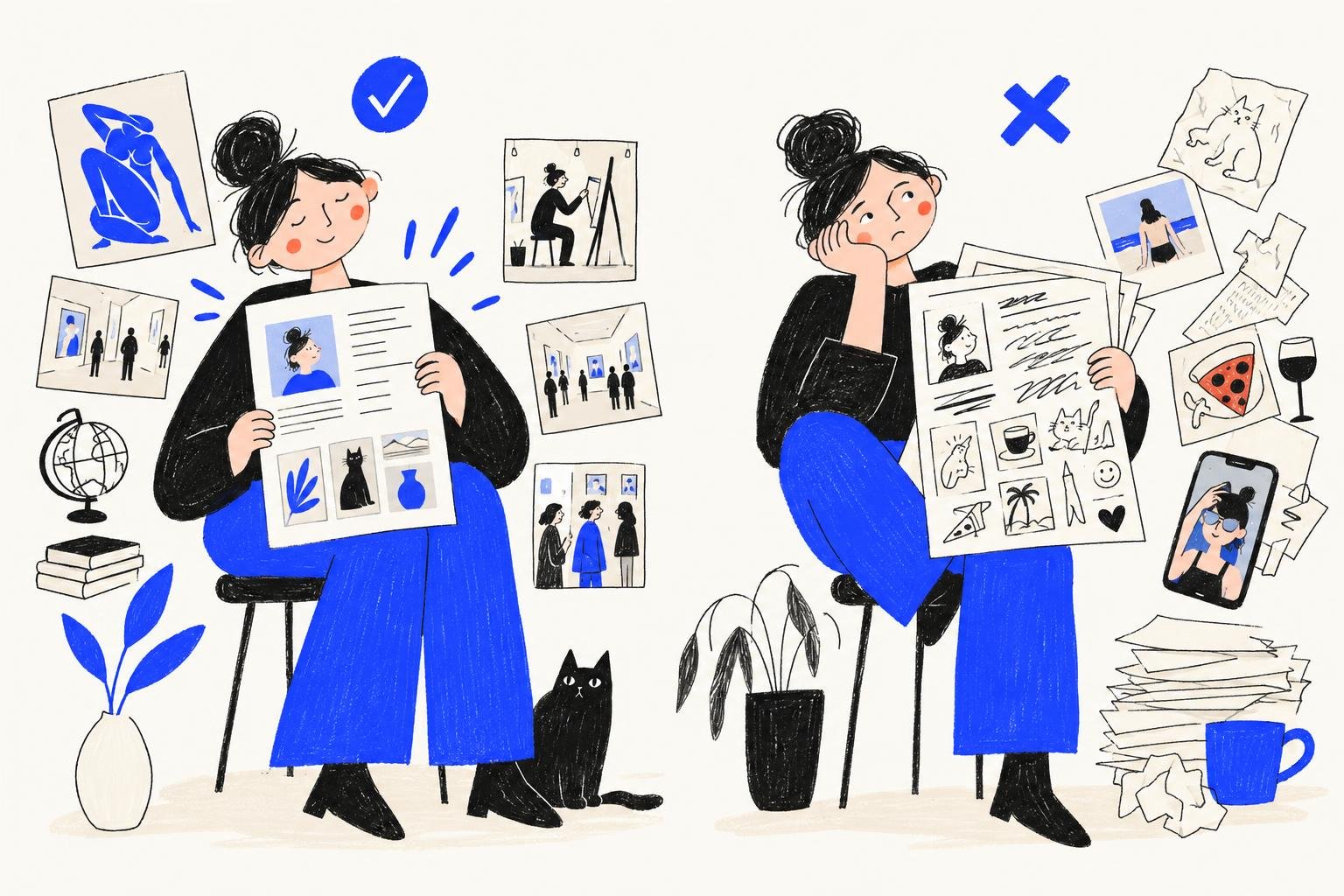
An artist CV is a record of your professional activity as an artist. It is read in thirty seconds by a juror who wants to answer two questions: is this person at the career stage the call is for, and have they done things like the thing we are offering? It is not a job résumé, so the retail job, the degree in economics and the list of software you know do not belong. It is not a statement either; what the work is about goes in the artist statement.
Section order
The conventional order, which juries scan without thinking:
Name and contact. Name, city, website, email. No street address, no photo, no date of birth unless the call asks for it.
Education. Degrees, year, institution. Self-taught artists write nothing here or list significant workshops and mentorships. Juries do not penalise an empty education section; they penalise an invented one.
Solo exhibitions. Year, title, venue, city. Newest first.
Group exhibitions. Same format. If the list is long, keep the last five years and add "selected".
Commissions and public art. Year, title or site, client, city. For muralists this is often the most important section; put it above exhibitions if that is what the call is about.
Residencies and fellowships. Year, programme, city.
Grants and awards. Year, name of the award, funder.
Press and publications. Author, title, publication, year. Include only things about your work, not things you wrote.
Collections. Public and corporate collections holding your work. Private collectors only if they are named institutions.
Talks, teaching, curating. Optional, short.
Swap the order when a call makes one section decisive: residencies first for a residency application, commissions first for a public-art call.
The entry format
One line per entry, the same shape every time:
2026 – Title of show, Venue name, City, Country
2025 – Mural, 12 × 8 m, commissioned by Client, Street or building, City
No descriptions, no adjectives, no "featured artist". The juror compares your list with everyone else's; a consistent format is what makes it readable.
A juror reads a CV in thirty seconds. Give them a list, not a story.
What to leave out
Non-art employment.
Software, skills and languages.
Social media follower counts.
Student shows after your first professional show.
Online-only "exhibitions" from entry-fee competitions; which competitions count is in Art competitions: which are worth entering.
References, unless the call asks for them.
A paragraph about yourself. That is a bio, a separate document.
Gaps, early careers and self-taught artists
A short CV is not a weak CV; it is an emerging artist's CV, and most calls for emerging artists expect exactly that. Three honest entries beat ten padded ones. If there are gaps, leave them; juries have gaps too. If you are self-taught, say nothing about education and let the exhibitions and commissions speak. If you have no exhibitions yet, lead with commissions, residencies or community projects, and apply to calls that do not require exhibition history.
Muralists and public artists
The standard CV undercounts mural careers, because a wall is not a show. Put commissions and public art second, right after contact, and give each wall its size, client and city. Festivals count as both commissions and exhibitions; list them once, under commissions, with the festival name. If you work in VR or AR on site, say so in one word in the entry ("12 × 8 m, painted with VR layout"); it is a differentiator juries remember. The way festivals select is in How to get into a mural festival.
One master, many cuts
Keep a master CV with everything, including the minor entries, and cut a two-page version for each application: the sections that call cares about, the last five to ten years, the strongest entries. Save each cut with the name of the call so you can reuse it.
This is also the document that Artists Agent works from. Paste the CV or bio once, and when the Agent matches you with a residency, grant, open call or festival, it drafts the opening of a tailored application from your real experience, for you to refine and submit. The better the CV, the better the draft.
Template
Copy, fill, delete what is empty.
NAME
City, Country · website · email
Education
2019 – MFA, Institution, City
2016 – BA Fine Art, Institution, City
Solo exhibitions
2026 – Title, Venue, City, Country
2024 – Title, Venue, City, Country
Group exhibitions (selected)
2026 – Title, Venue, City, Country
2025 – Title, Venue, City, Country
Commissions and public art
2026 – Mural, size, commissioned by Client, Site, City
2025 – Title, Client, City
Residencies and fellowships
2025 – Programme, City, Country
Grants and awards
2026 – Award name, Funder
Press and publications
2026 – Author, "Title", Publication
Collections
Institution, City
FAQ
How long should an artist CV be? Two pages for applications, cut from a longer master. Some calls ask for one page; most accept two. Three or more is not read.
Should an artist CV include a photo? No. Nor a date of birth, unless a call for a specific age group asks for it.
What is the difference between an artist CV and a résumé? A CV lists your activity as an artist: shows, commissions, residencies, awards. A résumé lists employment and skills for a job. Juries want the first.
What if I have no exhibitions? Lead with commissions, residencies, community projects or publications, keep it honest and short, and apply to calls for emerging artists, which expect a short CV.
Do I list art competitions on an artist CV? Awards and shortlists from competitions with a real jury and venue, yes, under grants and awards. Online-only entry-fee competitions, no.
Can I use the same CV for grants, residencies and open calls? The same master, cut differently: residencies first for a residency, commissions first for public art, exhibitions first for a show.
Your CV, turned into applications. Paste it once; Artists Agent matches you with residencies, grants, open calls and festivals you are eligible for and drafts the opening of each application from your real experience. Free to explore, no signup. Turn your CV into applications
▋