




Sketchar long read · 12 minutes · touch everything
40,000years of art
From a hand on a cave wall to the screen in your hand. Scroll through it, touch it, draw on it.
Tap the wall to leave your handprint
40,000 years agoEl Castillo, Spain · Sulawesi, Indonesia
The first signature
Someone pressed a hand to the rock and blew pigment around it. What stayed on the wall was the shape of a hand, and a message: I was here.
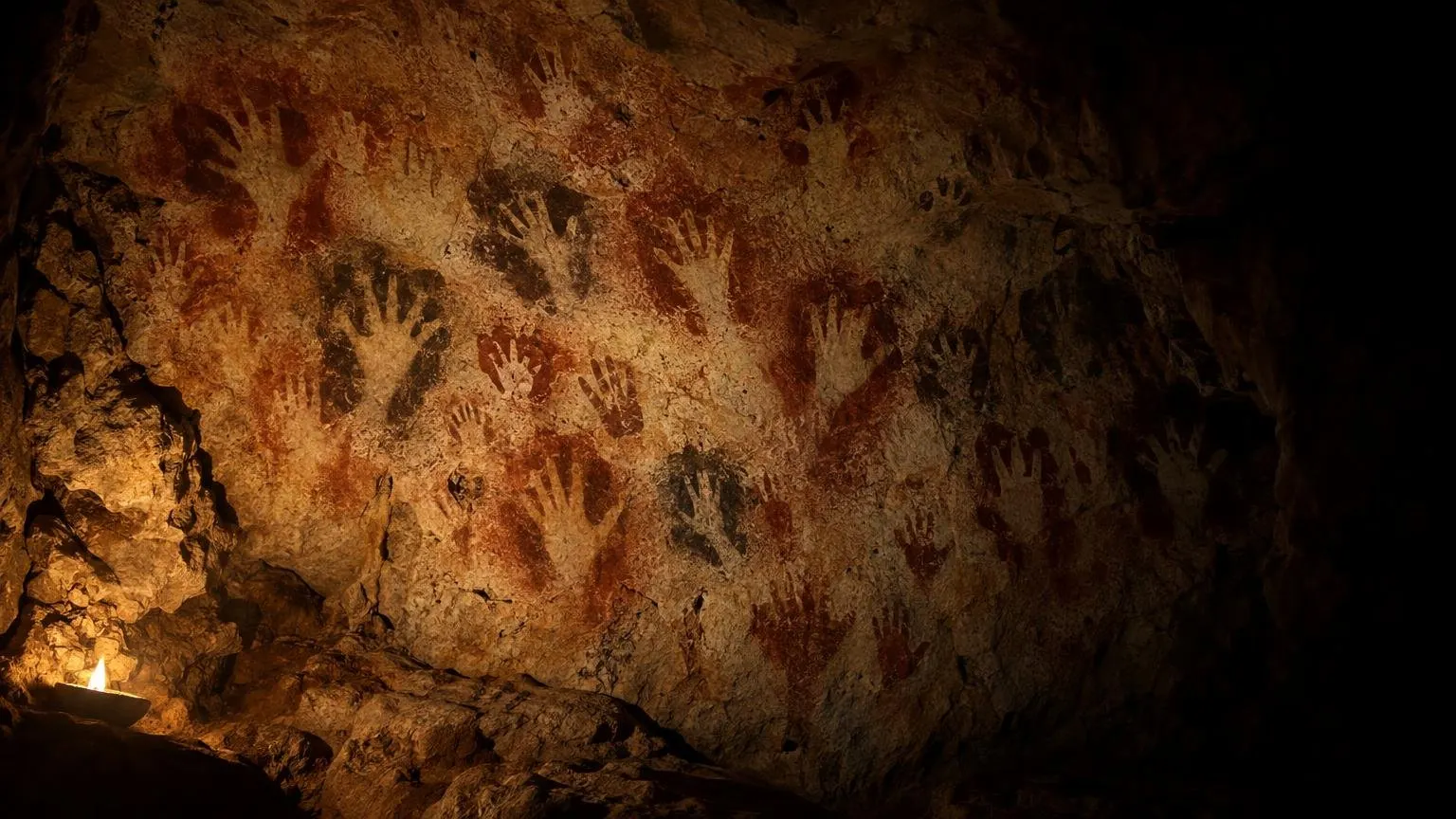
Hand stencils are among the oldest pictures we have. They turn up on every inhabited continent, in caves tens of thousands of years apart, and they were made the same way everywhere: red ochre or charcoal, ground and mixed with water or spit, then blown from the mouth or through a hollow bone. Measurements suggest that many of the hands belonged to women.
51,200
years at least: the age of a scene with people and a pig in Leang Karampuang cave, Sulawesi. The oldest story told in pictures that we know of, dated in 2024.
600
painted animals in Lascaux, France, about 17,000 years ago, next to some 1,500 engravings. Horses, aurochs, deer, and one odd creature that experts still can't identify.
3
colors carried painting for tens of thousands of years: red and yellow ochre from the earth, and black from fire.
2600 BCEEgypt, Greece, Rome, Byzantium, Padua
Three thousand years of rules
For most of history a picture didn't try to look like what you see. It tried to show what you know.
-
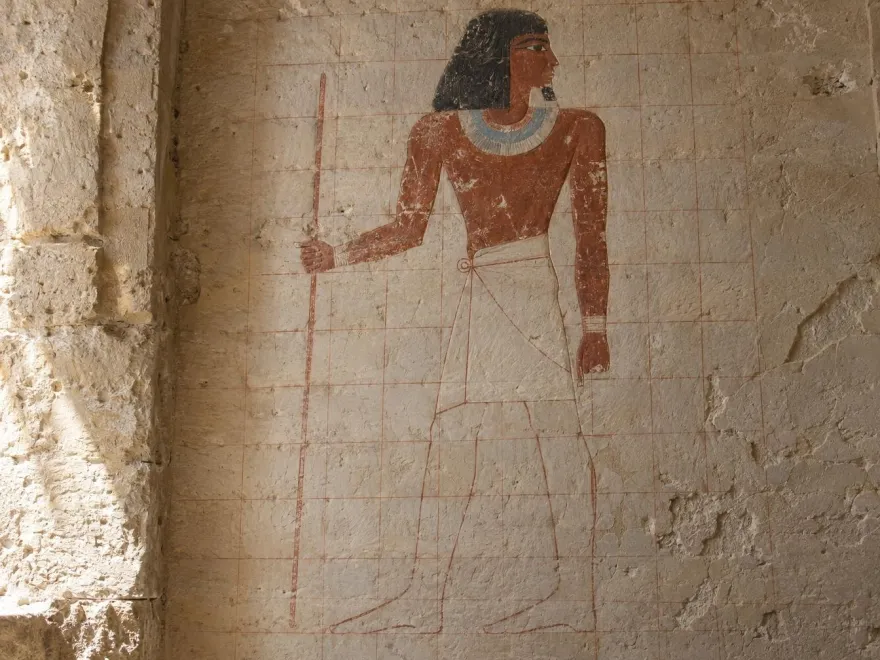
c. 2600 BCE · Egypt
A grid for eternity
Painters drew figures over a grid, and the proportions barely changed for almost 3,000 years. Head in profile, eye from the front, shoulders turned to you: every part from its clearest side.
-
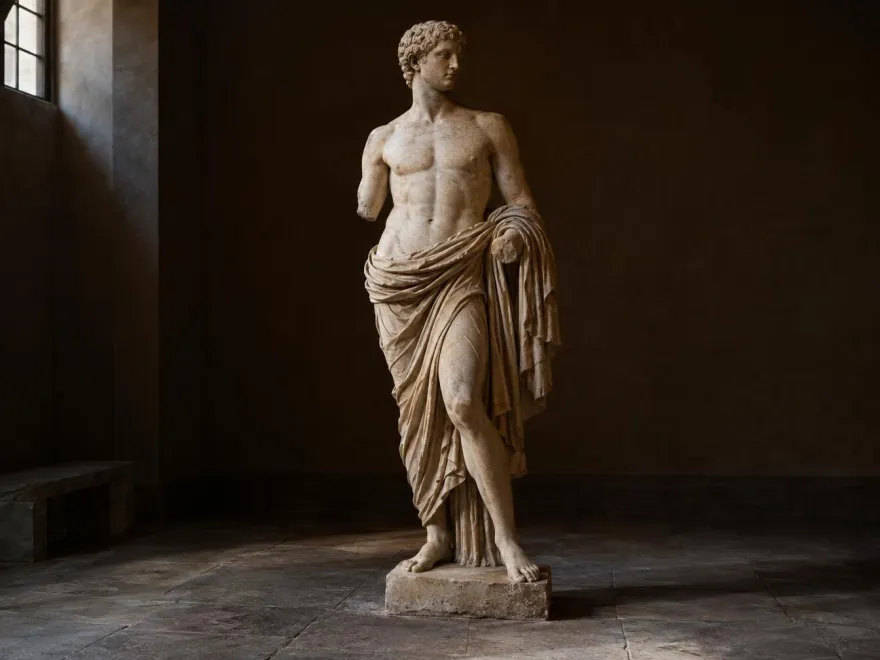
c. 450 BCE · Greece
The body learns to stand
Sculptors shifted the weight onto one leg, and stone started to breathe. Polykleitos wrote the ideal proportions into a book he called the Canon.
-
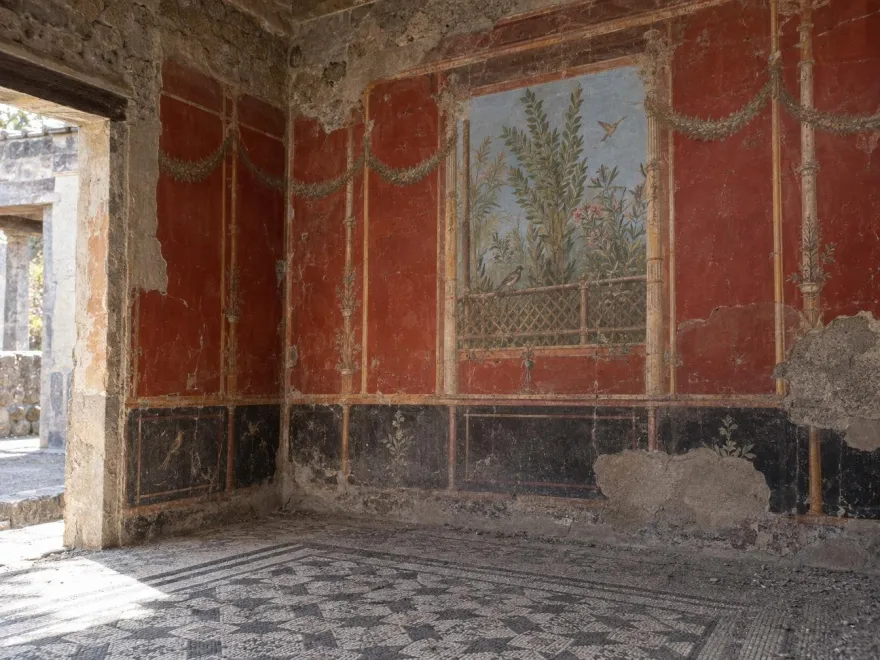
79 CE · Pompeii
Windows painted on walls
Roman painters faked marble, gardens and views out of windows that were never there. Vesuvius buried them in ash, which is why we can still see them.
-
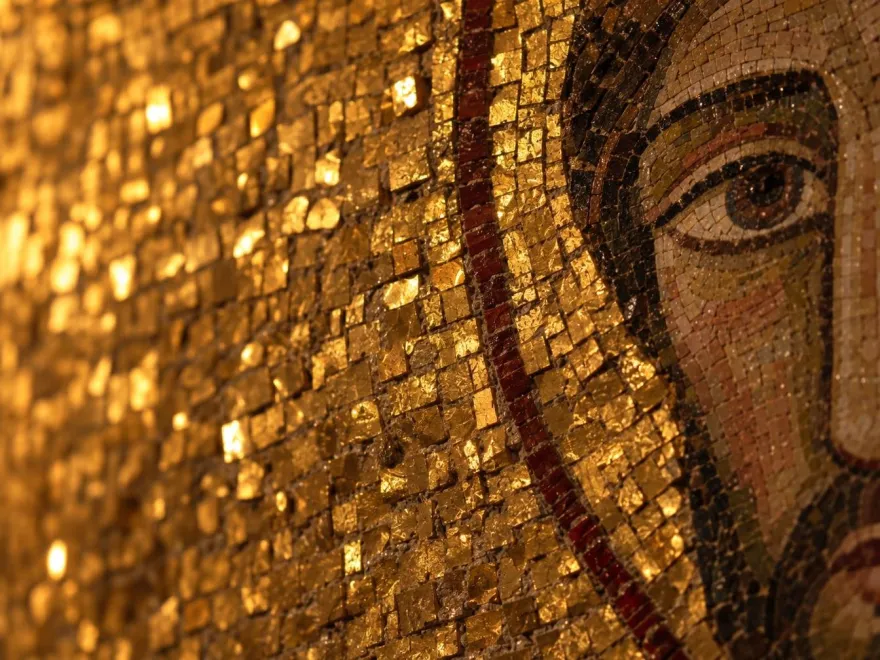
c. 1000 · Byzantium
Gold instead of sky
An icon was not a window but a door. Gold leaf stands for heavenly light, and the saints float in it with no horizon at all.
-
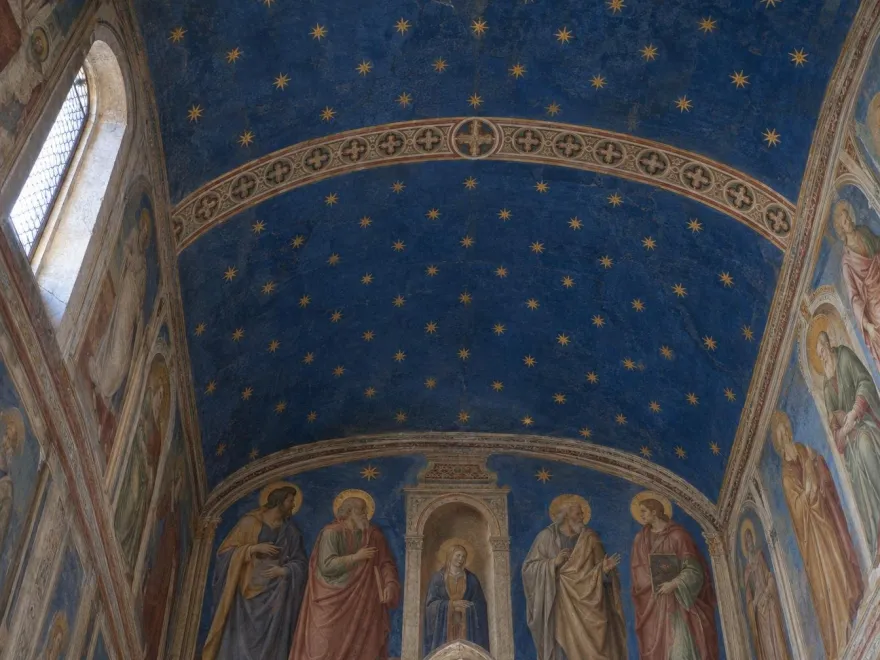
1305 · Padua
Giotto paints a feeling
In the Scrovegni Chapel, Giotto gave saints weight, shadows and grief, under a vault of blue scattered with gold stars. The Renaissance starts here, a century early.
1511Rome
The world gets a vanishing point
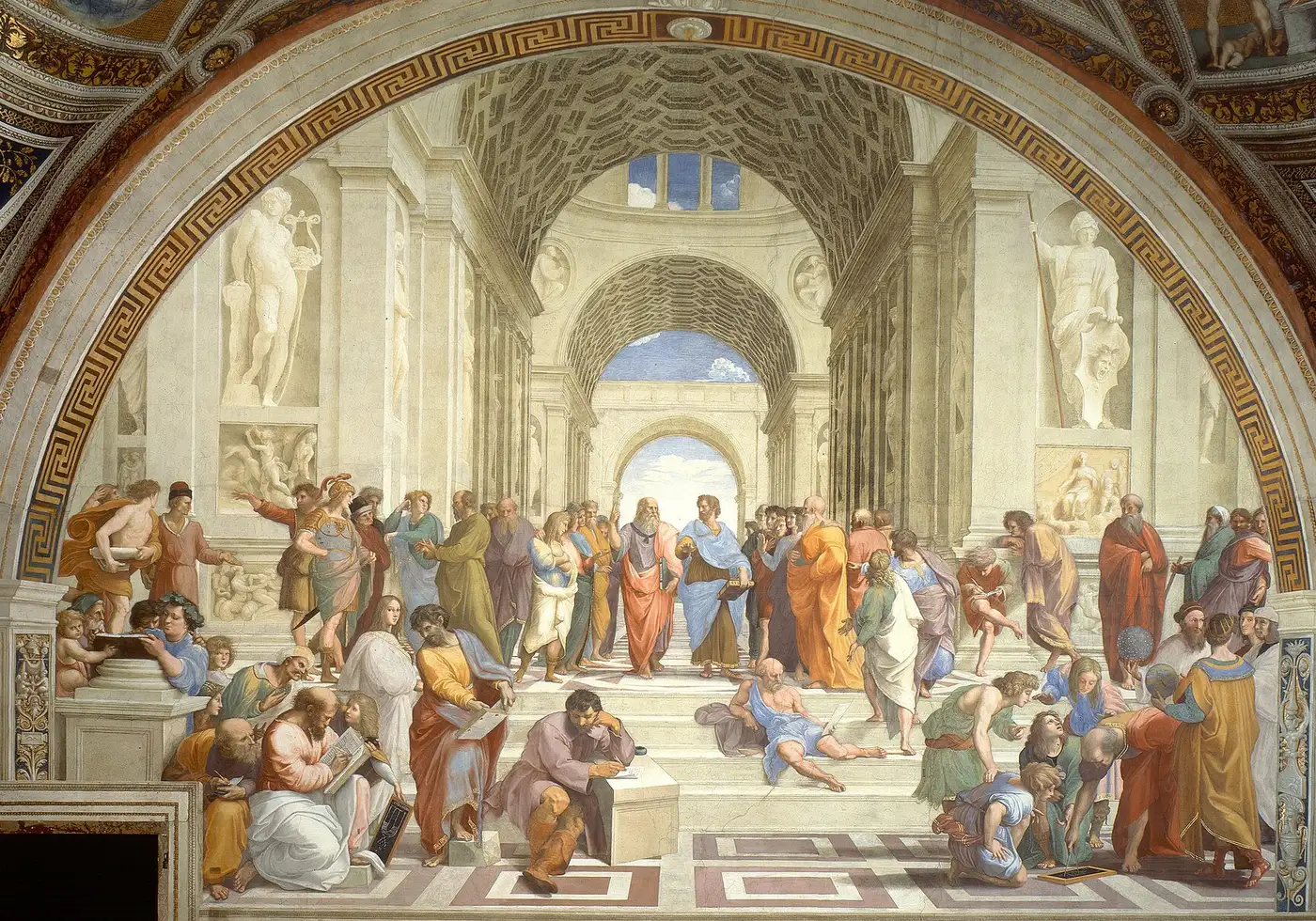
Parallel lines meet on the horizon. Painters had seen it for centuries; in Florence they finally wrote down the rule.
 Plato
Aristotle
Vanishing point
Around 1415 the architect Filippo Brunelleschi showed Florence a painted panel of its baptistery that matched the real building line for line. In 1435 Leon Battista Alberti wrote the method down, and a painting became a window you look through.
Raphael's School of Athens is the textbook case. The floor, the steps and the vaults all run toward one point, right between Plato and Aristotle, so your eye lands on them before it notices anyone else. Plato, pointing up, is often said to wear Leonardo da Vinci's face.
1600Rome
Light becomes the story
Caravaggio painted in near darkness and let one beam of light do the talking. Move your finger or your cursor over the painting: you are the light.
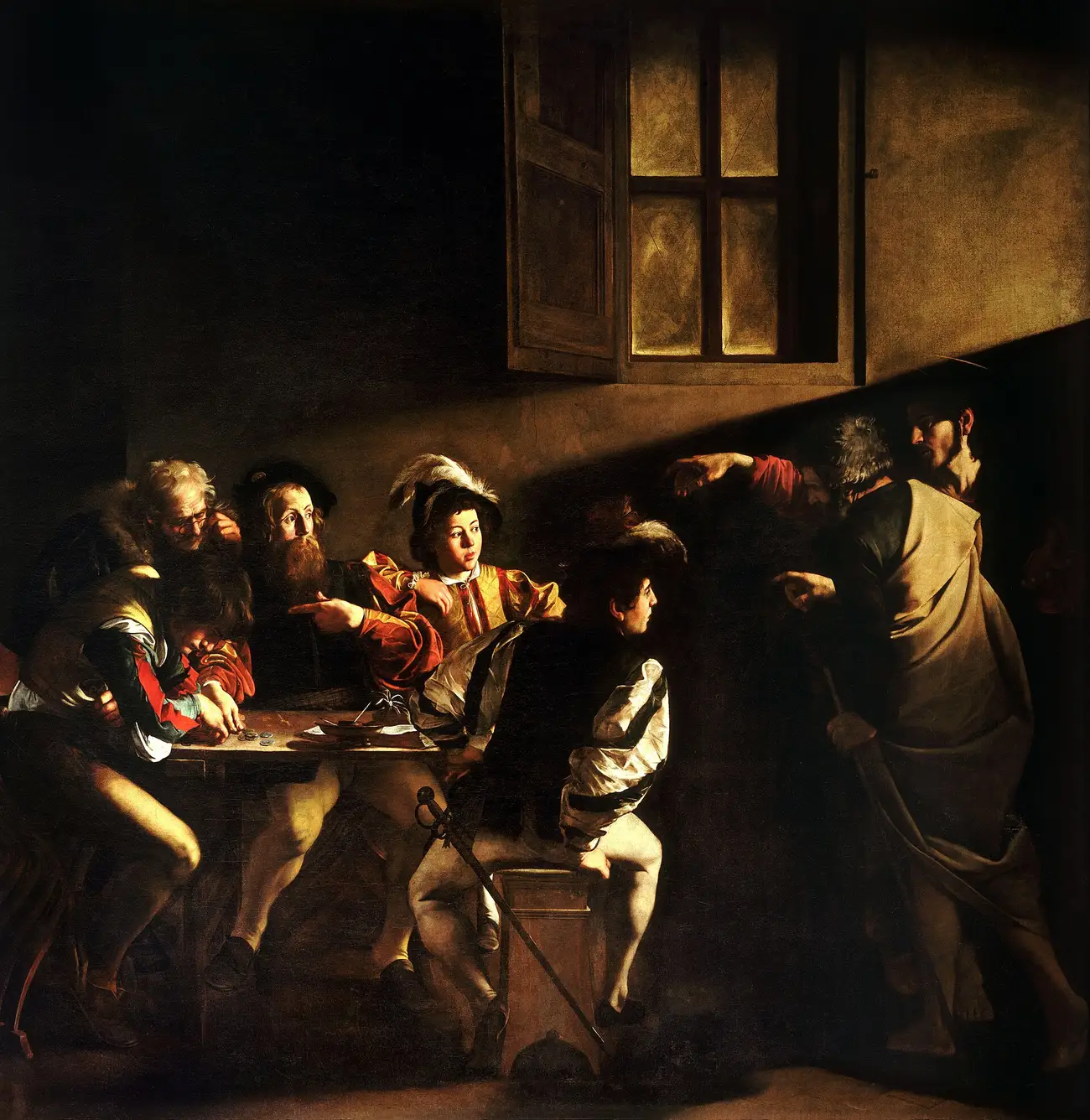
Light enters with Christ from the right and falls on a table of tax collectors. The contrast is so hard that painters gave it its own word, chiaroscuro, light and dark, and after Caravaggio half of Europe painted in his shadow.
Who is Matthew? Most say the bearded man pointing at himself. Some say the young man at the end of the table who won't look up from the coins. Four hundred years later, the light still hasn't settled it.
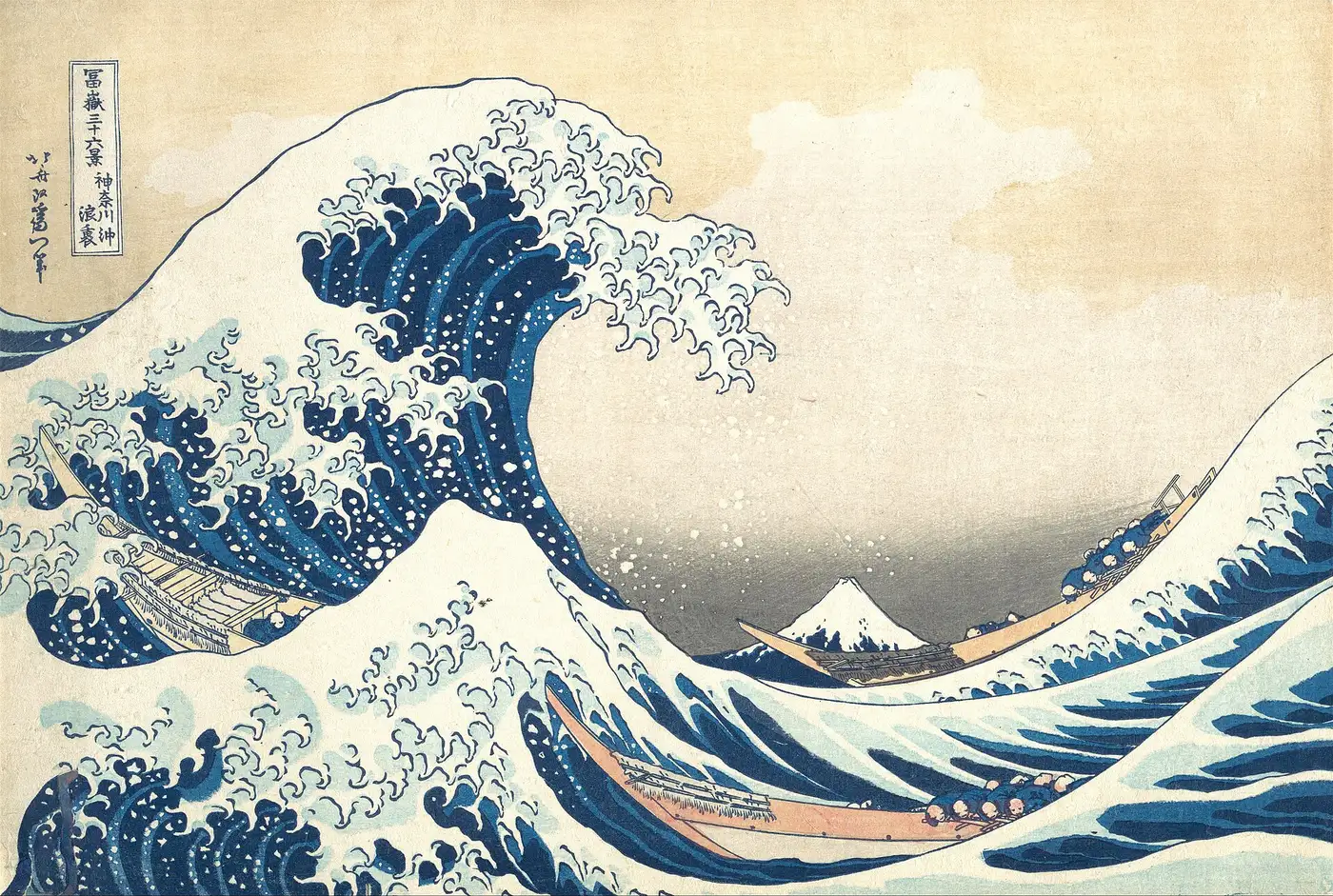
c. 1831Edo, Japan
A wave crosses the world
Hokusai's Great Wave was not made for a museum. It was a woodblock print, sold for about the price of a double helping of noodles.
Its deep blue is Prussian blue, a synthetic pigment invented in Berlin and shipped to Japan, where printers loved how well it lasted. Katsushika Hokusai was about seventy when the print came out, and the block was printed again and again for years.
A few decades later the prints sailed the other way. Japanese woodblocks reached Paris, and young painters saw flat color, bold outlines and scenes cut off at the edge. They called the craze Japonisme, and it rewired the way the West painted.
1872Le Havre
Paint the moment, not the thing
Keep scrolling and watch Monet's harbor appear the way he built it: dab by dab, fast, before the sun moved.
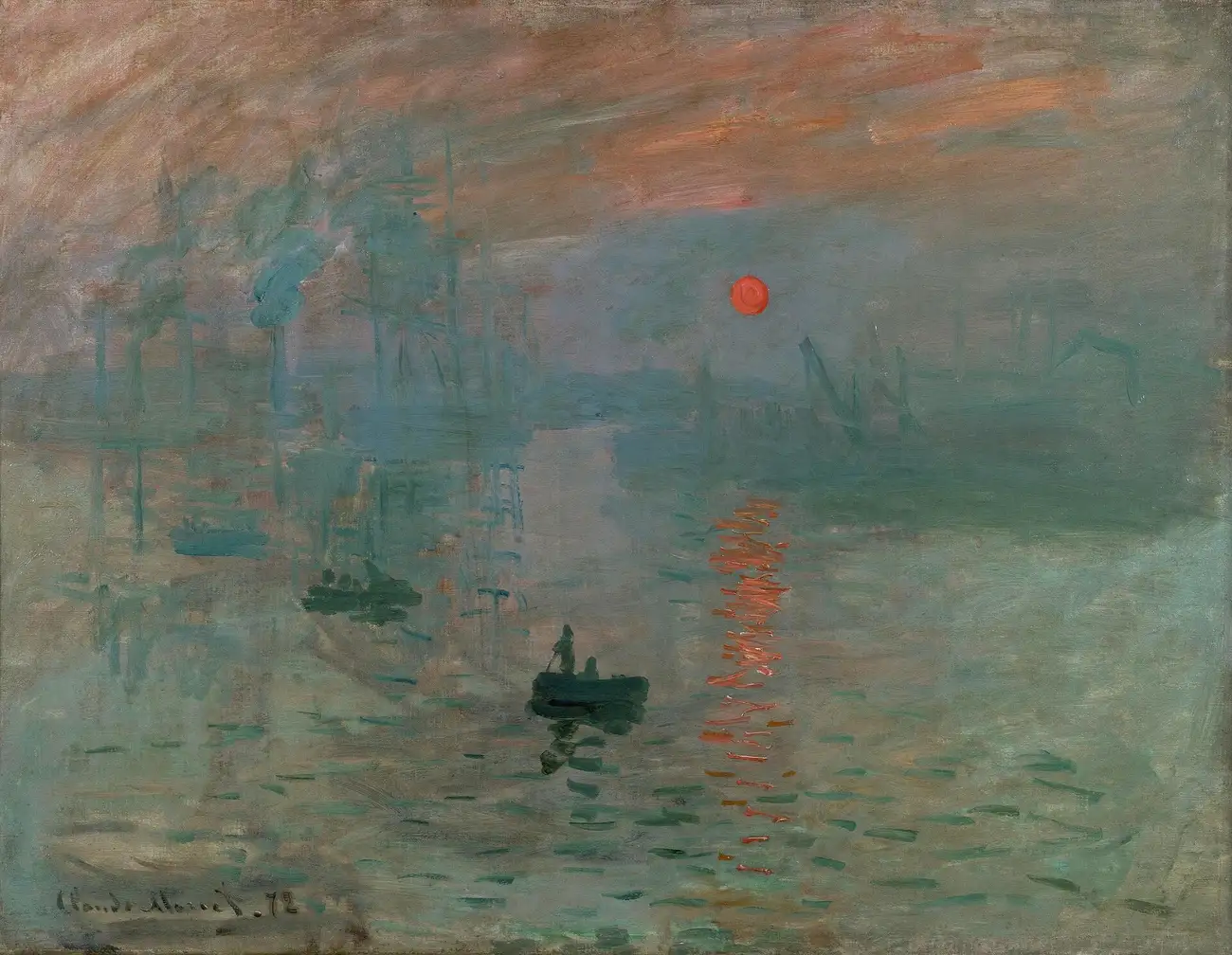
Paint in tin tubes, new in the 1840s, let painters leave the studio and work outside. Monet painted the port of Le Havre at dawn in loose, quick strokes, more interested in the light on the water than in the ships.
At an exhibition in Paris in 1874, a critic took the painting's title to mock the whole show as unfinished impressions. The painters kept the name: Impressionists.
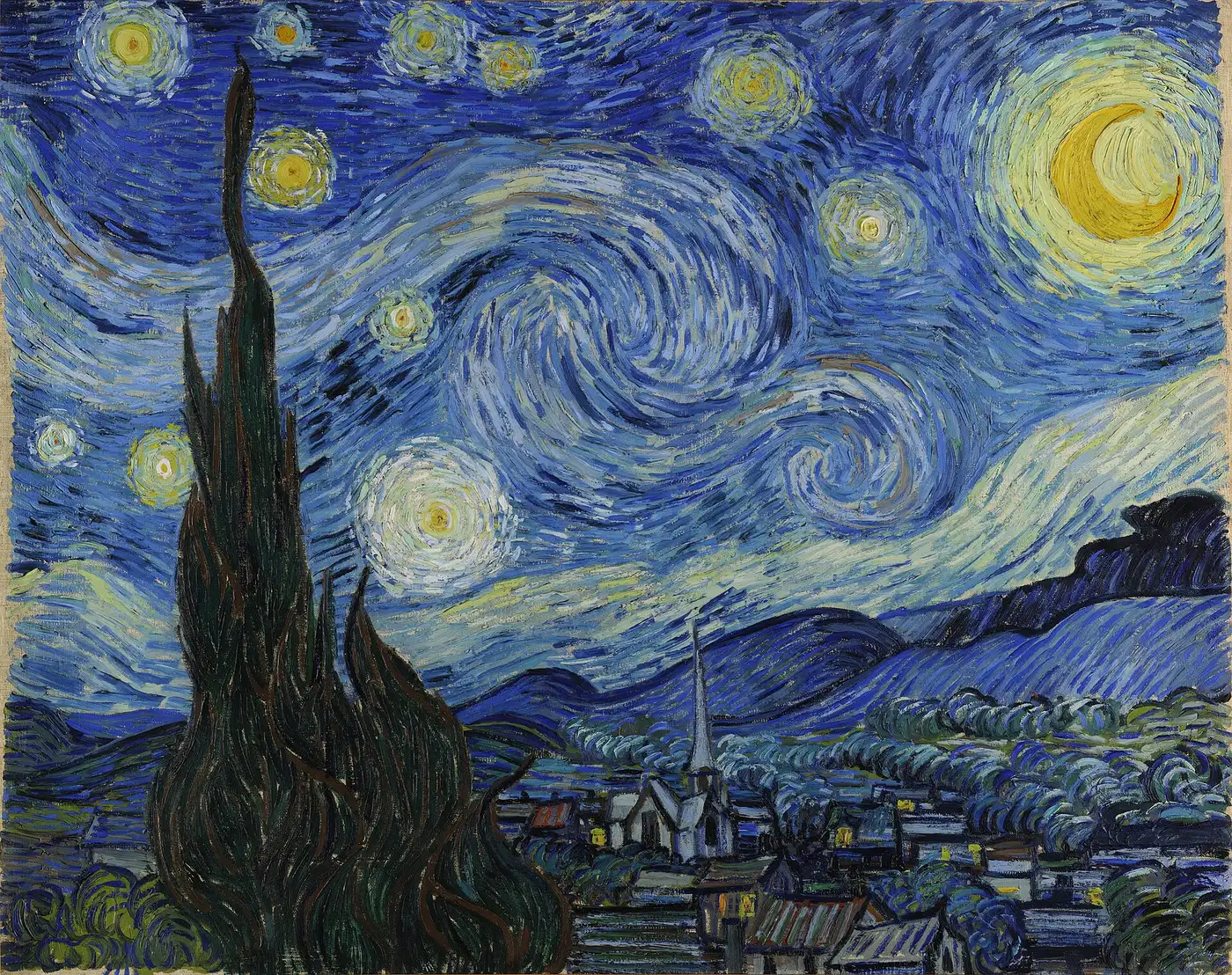
1889Saint-Rémy-de-Provence
The night, felt rather than seen
“For my part I know nothing with any certainty, but the sight of the stars makes me dream.”
Vincent van Gogh wrote this to his brother Theo in 1888. A year later, in the asylum at Saint-Rémy, he painted the view from his window, then let the sky boil over it.
1907Paris
Every angle at once
Picasso and Braque took things apart and showed several sides of them on one canvas. Scroll, and watch Vermeer's girl, painted in 1665, go through what painting went through in 1907.
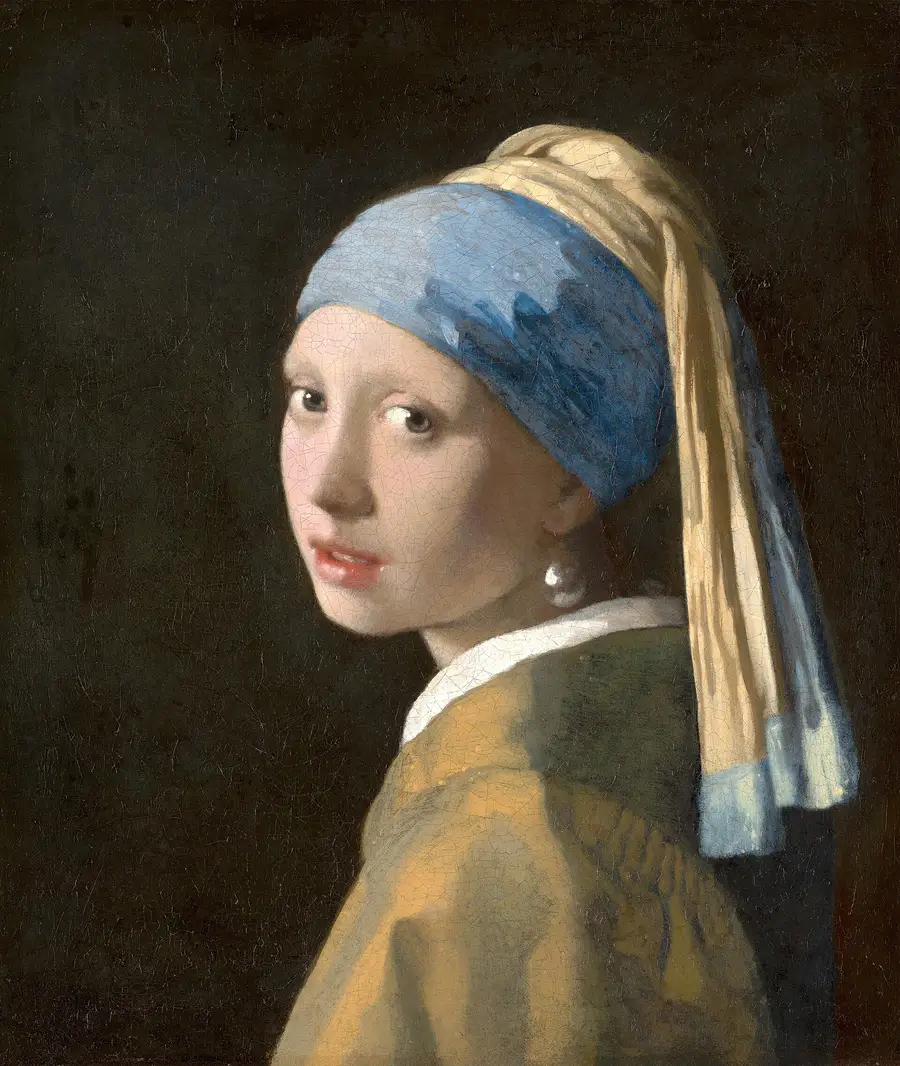
Johannes Vermeer, Girl with a Pearl Earring, c. 1665. Mauritshuis, The Hague. The fracturing is ours.
A camera could now record how a thing looks from one spot, so painting went after what the eye can't do: a nose in profile on a face seen from the front, a guitar from above and from the side at the same time.
In 1907 Picasso painted Les Demoiselles d'Avignon. By 1912 he and Braque were gluing newspaper and wallpaper straight onto their pictures, and collage was born.
1913Munich · Petrograd
Painting stops pointing at things
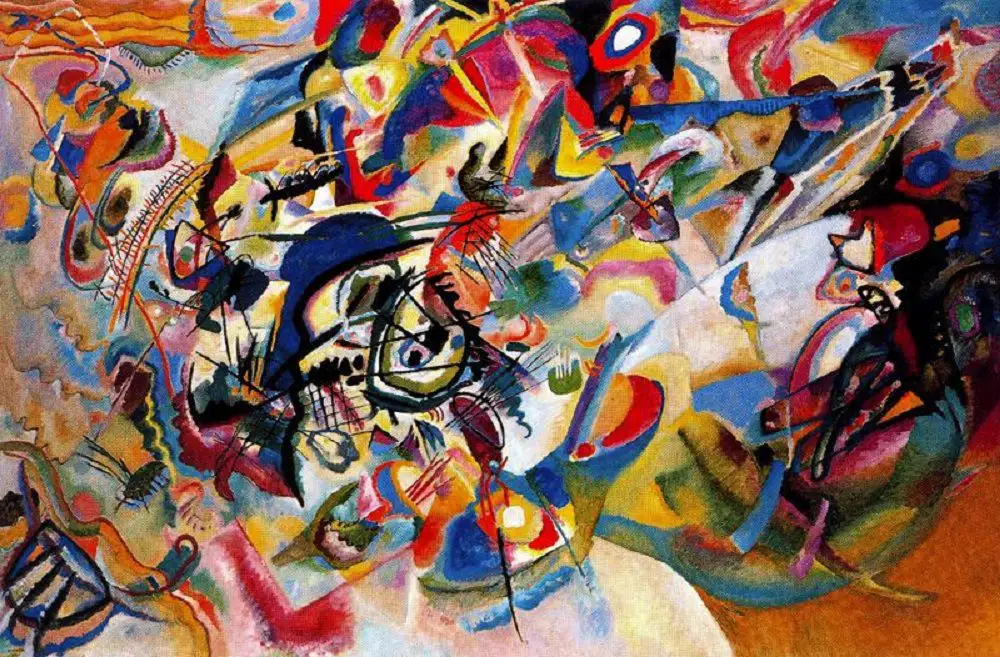
Wassily Kandinsky painted Composition VII as a storm of color with nothing in it to recognize. Music doesn't depict anything either, he argued, and it still moves you.
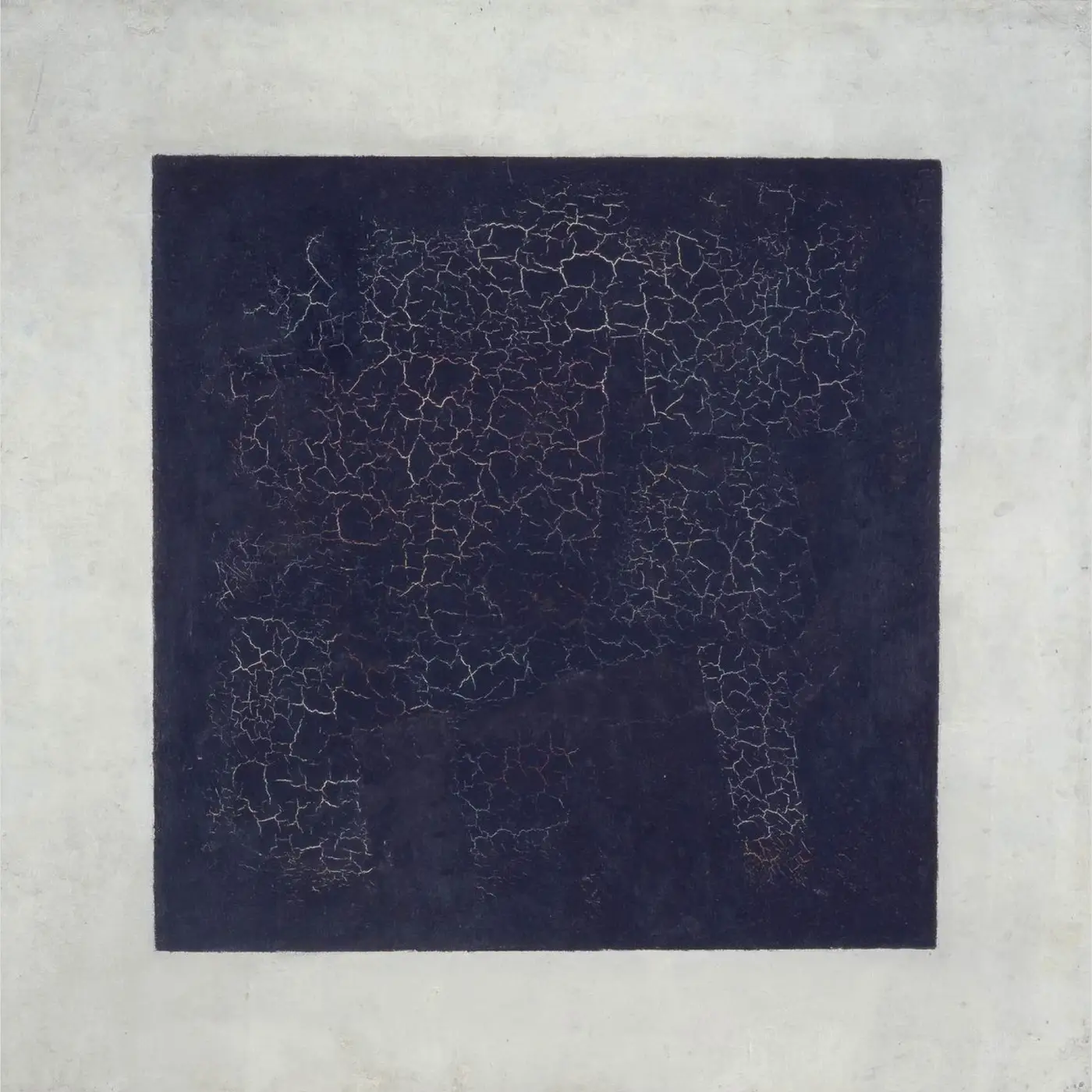
Black Square, 1915
1915, Petrograd. Kazimir Malevich hangs a black square on a white ground.
He places it high in the corner of the room, where a Russian home keeps its icon.
He called it the zero of form. Everything after it starts from here.
1930Paris
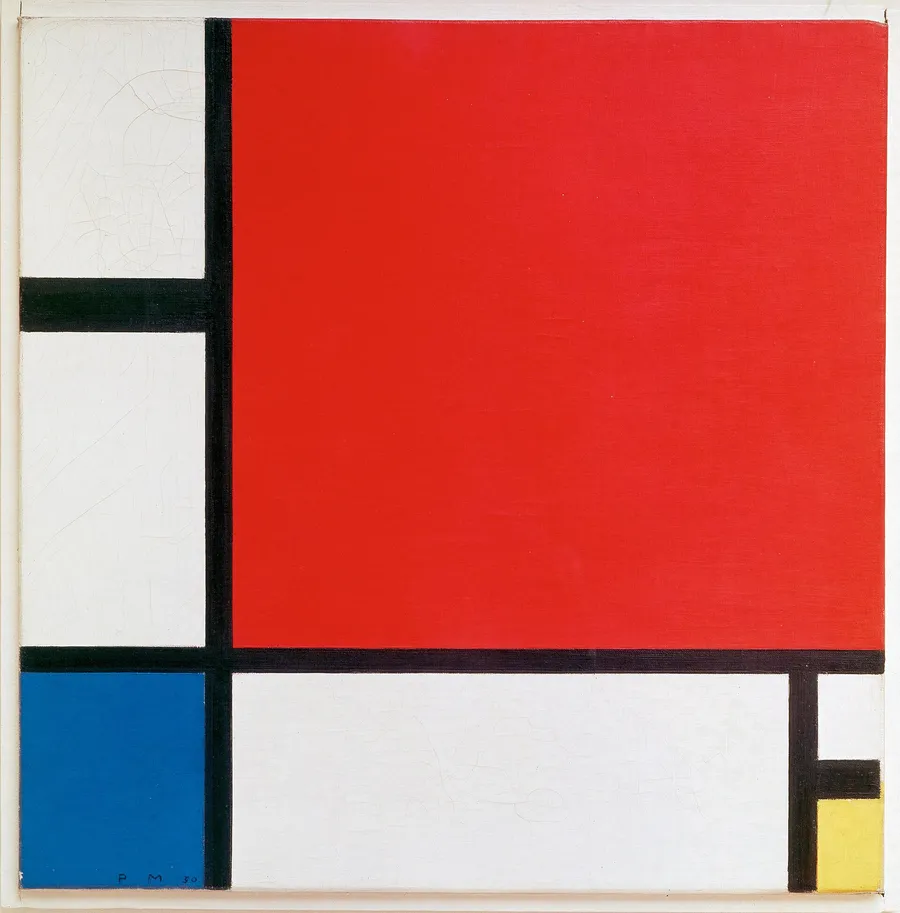
Three colors and a line
Piet Mondrian cut painting down to black lines, white, and red, yellow and blue. It looks simple until you try to balance it. Tap the canvas to compose your own.
1947Springs, New York
The painting is a dance
Jackson Pollock laid the canvas on the floor of his barn and walked around it, dripping and flinging paint from sticks and old brushes. Your turn: drag across the canvas.
His brush never touched the surface, so the marks record how his arm moved: fast gestures leave thin, flying lines; slow ones pool into heavy drops. Critics called it action painting, and in 1949 Life magazine asked whether he was the greatest living painter in the United States.
1962New York
Art eats the supermarket
Andy Warhol painted thirty-two cans of Campbell's soup, then switched to silkscreen: a photo, a stencil, a squeegee, repeat. Tap a tile to print it again.
If a soup can could be art, so could a movie star, a dollar bill or a car crash from the news. In 1963 Warhol turned even the Mona Lisa into a print run and called it Thirty Are Better Than One. The question he left behind is open on every phone: what happens to a picture when everybody has a copy?
2026Everywhere
The next mark is yours
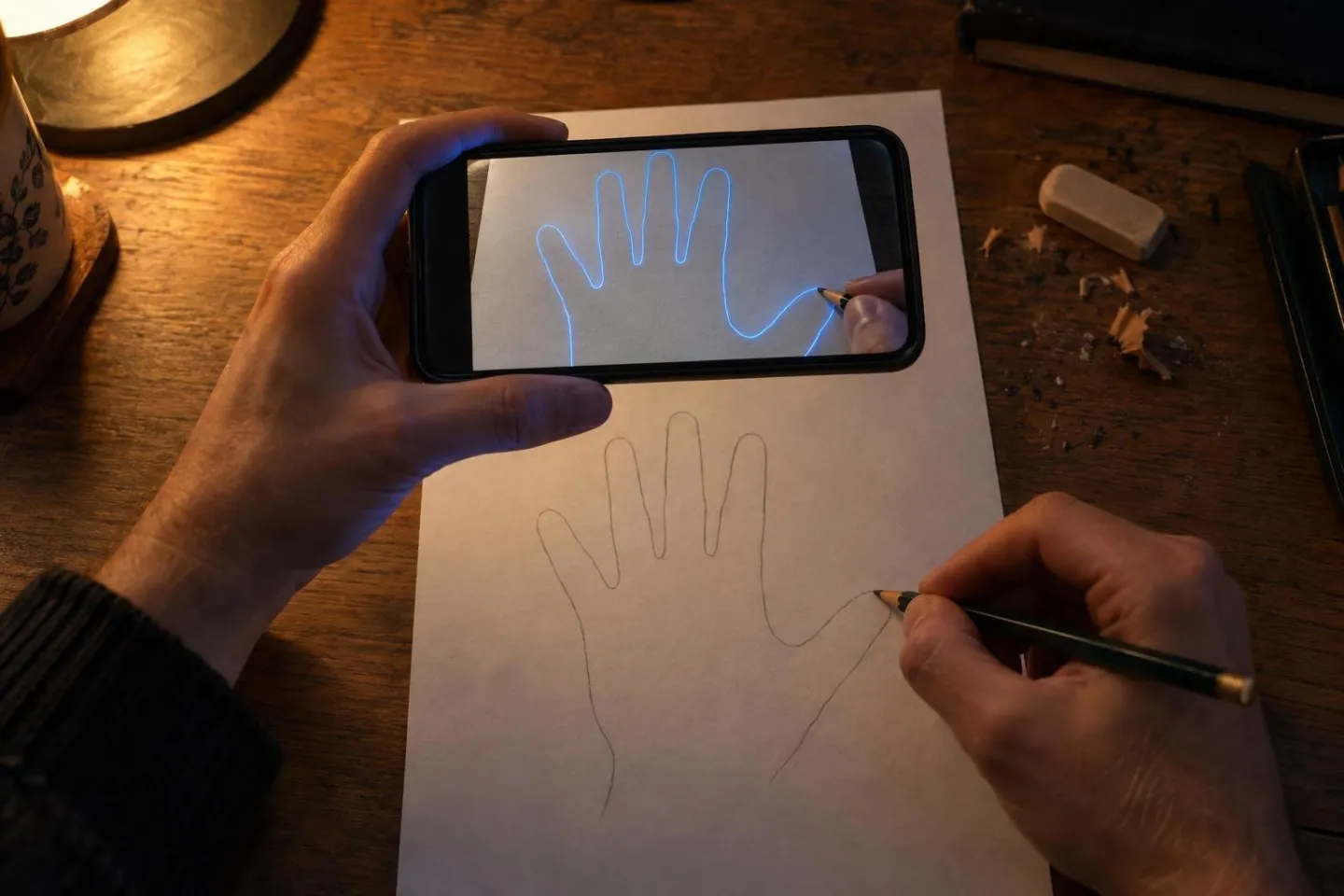
Today a picture is a file, a feed, a wall in the street, a layer over the camera. The tools keep changing. The gesture hasn't.
 Sketchar
 lays any picture over your paper through the phone's camera, so you can trace it line by line, and its lessons walk you through drawing it from scratch. Forty thousand years ago it started with a hand on a wall. It still starts with a hand.
See how AR drawing worksIllustration made for this page.
Questions about the history of art
The oldest story told in pictures that we know of is a scene with people and a pig in Leang Karampuang cave on Sulawesi, Indonesia, at least 51,200 years old. Hand stencils such as those in El Castillo cave in Spain are about 40,000 years old.
The architect Filippo Brunelleschi demonstrated it in Florence around 1415, and Leon Battista Alberti wrote the method down in 1435. Raphael's School of Athens, painted in 1511, is the textbook example.
Chiaroscuro is Italian for light and dark: a strong contrast between lit and shadowed parts of a painting. Caravaggio made it the centre of his work around 1600, as in The Calling of Saint Matthew.
The name comes from Claude Monet's painting Impression, Sunrise of 1872. At an exhibition in Paris in 1874 a critic used the title to mock the whole show, and the painters kept the name.
Cubism is a way of painting that shows several sides of a thing on one canvas. Pablo Picasso and Georges Braque developed it in Paris from 1907.
Abstract art does not depict recognizable things. Wassily Kandinsky's Composition VII of 1913 and Kazimir Malevich's Black Square of 1915 are two of its early landmarks.
Yes. Tracing trains the hand and the eye for proportion, and artists have used optical aids for centuries. Sketchar's AR drawing lays the lines of any picture over your paper through the phone's camera so you can trace them.
Keep reading
- The history of augmented realityFrom a prism over paper in 1806 to AR drawing on your phone.→
- The history of digital artFrom Sketchpad to drawing apps: a timeline you can draw in.→
- Is AR drawing cheating?Artists have traced for centuries. What it does for learning to draw.→
- Street art vs graffitiWhere the two meet and where they part.→
- Learn to draw with SketcharStep-by-step lessons, from the first line.→