

Sketchar long read · 10 minutes · draw in every era
The history of digital art
From 176 pixels in 1957 to the canvas in your pocket. Every chapter is a working tool of its time. Pick it up and draw.
The short answer
What is digital art?
The definition first, then seventy years of tools you can try.
Digital art is art made with a computer and stored as numbers instead of pigment: pictures drawn on a screen, generated by code or painted with a stylus.
It began in the early 1960s, when people first programmed digital computers to draw: Ivan Sutherland's Sketchpad in 1963, the first gallery shows in 1965. Almost every digital picture is one of two kinds, and the difference shows as soon as you zoom in.
Raster
A grid of coloured squares, pixels. Photos and paintings are raster. Zoom in and you see the squares.
Vector
Shapes described by maths: lines and curves. Logos and fonts are vector. Zoom in and they stay sharp.
The history of digital art at a glance
- 1952Ben Laposky photographs light patterns from an oscilloscope
- 1957Russell Kirsch scans the first digital image, 176 pixels wide
- 1963Ivan Sutherland's Sketchpad, the first drawing program
- 1965The first exhibitions of computer art open in Stuttgart and New York
- 1973SuperPaint at Xerox PARC, the first complete paint system
- 1984MacPaint ships with the first Macintosh
- 1987Adobe Illustrator puts Bézier curves on the desktop
- 1990Photoshop 1.0 is released; layers follow in 1994
- 2010The iPad turns the screen into the drawing surface
- 2021A digital artwork sells for $69.3 million; a year later AI draws from text
1952Cherokee, Iowa
Drawing with electricity
Before computers could draw, a draftsman from Iowa pointed a camera at an oscilloscope.
Around 1952 Ben F. Laposky began feeding electrical signals into a cathode-ray oscilloscope and photographing the glowing curves on its screen. He called the pictures Oscillons. In 1953 they went on show at the Sanford Museum in Cherokee, and the exhibition, “Electronic Abstractions”, later toured more than 200 American institutions.
This was electronic art, not yet computer art: the oscilloscope was an analogue instrument and there was no digital computer in the room. But the idea was set. A picture could be made of light on a screen, and a machine could hold the brush.
1957Washington, D.C.
The first picture made of numbers
A photograph the size of a matchbox became a grid of 30,976 squares.
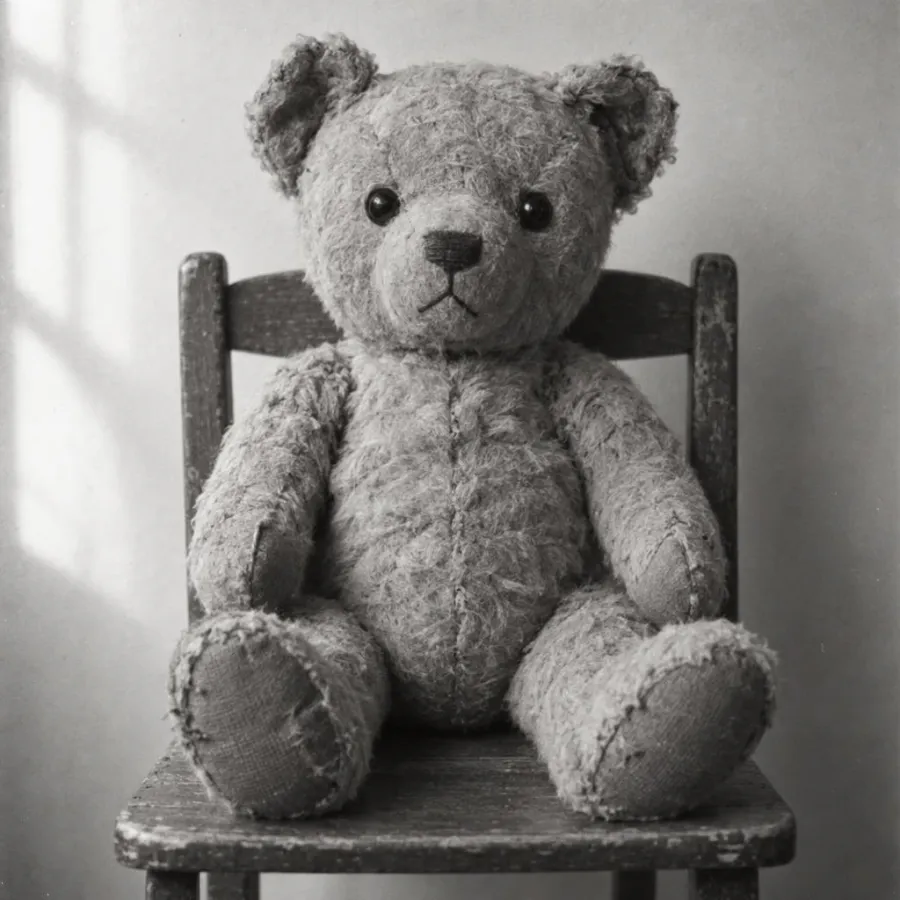
In 1957 Russell Kirsch and his team at the US National Bureau of Standards built a drum scanner and connected it to SEAC, one of the first American computers. The first photograph they fed it showed Kirsch's three-month-old son, Walden. It came out as 176 by 176 pixels from a print about five centimetres square, each pixel either black or white.
Kirsch's question was simple: “What would happen if computers could look at pictures?” Everything that followed, from satellite images to the camera in your phone, starts with that grid. The word pixel itself first appeared in print in 1965, in papers by Fred Billingsley of NASA's Jet Propulsion Laboratory.
1963Lexington, Massachusetts
The first drawing program
For the first time a person drew directly on a computer screen and the computer understood the drawing.
In January 1963 Ivan Sutherland submitted his PhD thesis at MIT. It described Sketchpad, a program running on the TX-2 computer at Lincoln Laboratory. With a light pen the user drew lines and arcs on a seven-inch screen, and the computer kept them as objects it could move, copy and correct.
Sketchpad introduced ideas every drawing program still uses. You could tell two lines to stay parallel or a corner to stay square, and the machine enforced it. You could draw a shape once and reuse copies that all changed together. You could zoom in by a factor of 2,000. Sutherland wrote that until then people had been “writing letters to rather than conferring with our computers”.
1965Stuttgart · New York
Computer art enters the gallery
The first artists did not draw. They wrote instructions and let a machine hold the pen.
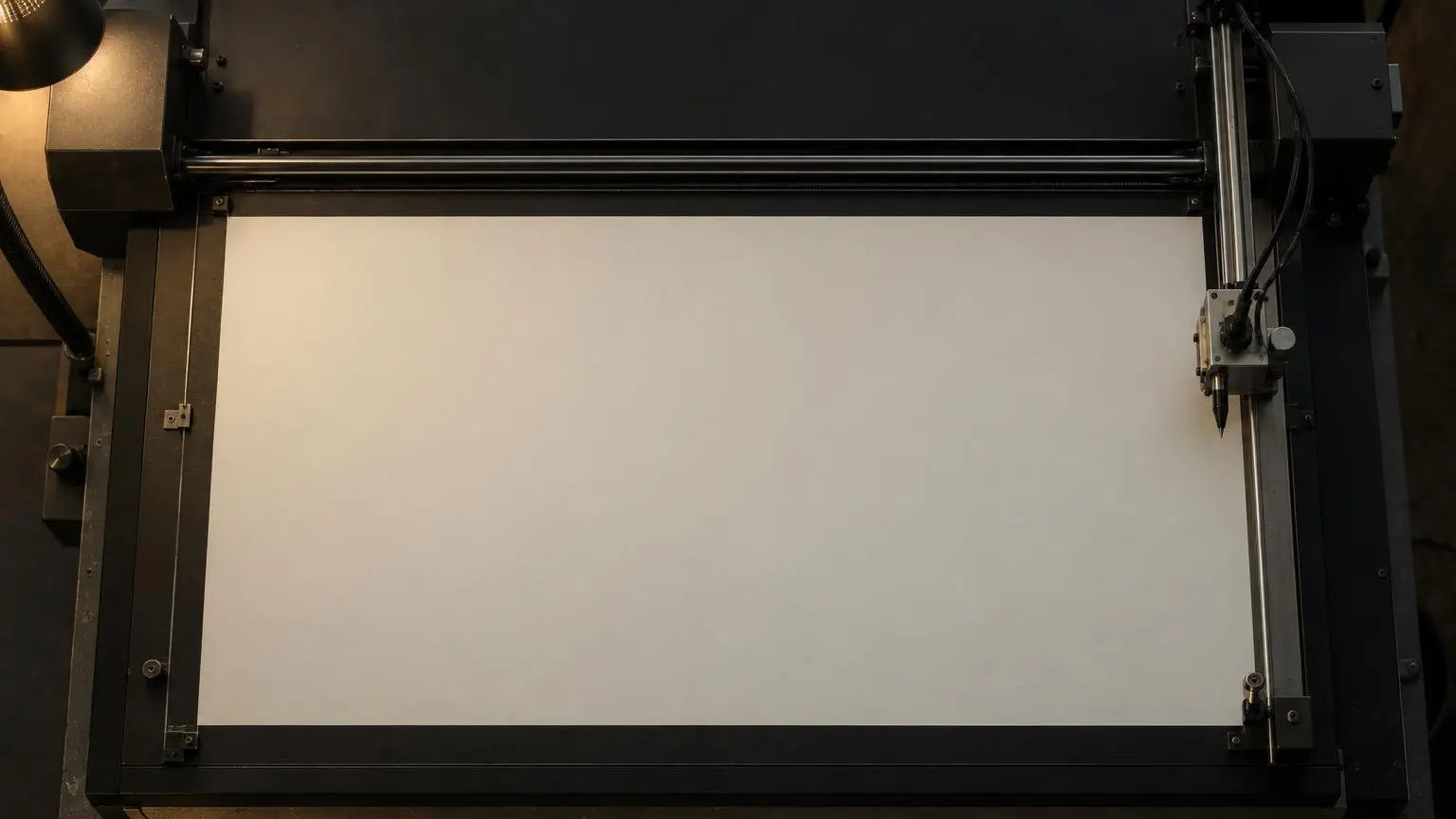
In February 1965 the mathematician Georg Nees showed drawings made by a computer-driven plotter at the Technical University of Stuttgart. It was the first public exhibition of computer art. In April A. Michael Noll and Béla Julesz opened “Computer-Generated Pictures” at the Howard Wise Gallery in New York. Not a single work was sold.
The method was new: a rule, a random number and a pen. In 1968 the exhibition “Cybernetic Serendipity” at the Institute of Contemporary Arts in London brought the field to more than 60,000 visitors, and in Paris Vera Molnár began the plotter drawings she would make for decades.
1973Palo Alto, California
The first paint program
Lines were not enough. To paint, a computer had to remember the colour of every point on the screen.
That memory is called a frame buffer. In 1969 Joan Miller at Bell Labs wrote a crude paint program with three bits per pixel. In 1972 and 1973 Richard Shoup at Xerox PARC built SuperPaint, the first complete paint system: a tablet and stylus, a menu of brushes and 256 colours on screen at once, chosen from 16.7 million.
Almost everything on a modern paint screen was already there: a palette, brush sizes, the ability to grab a video frame and paint over it. Xerox did not turn it into a product. Television did: in 1981 the Quantel Paintbox arrived in broadcast studios at about $250,000 a machine, and for a decade most graphics on TV were painted on one.
1984Cupertino, California
Painting comes home
A mouse, a black-and-white screen and a paint bucket put a drawing program in front of ordinary people.
In January 1984 the first Apple Macintosh shipped with MacPaint, written by Bill Atkinson. It ran in 128 kilobytes of memory on a screen with only black and white pixels. It had a pencil, a spray can, a lasso, a paint bucket with patterns and a zoom mode called FatBits for editing single pixels.
Colour followed quickly. At the launch of the Commodore Amiga on 23 July 1985, Andy Warhol sat down at the new computer in front of an audience and recoloured a digitised photograph of Debbie Harry. “It looks like my work,” he said.
1987Paris · California
Curves you can pull
A curve defined by four points turned out to be the most useful drawing tool a computer ever got.
French car makers needed a way to describe the smooth curves of a car body in numbers. Paul de Casteljau worked it out at Citroën in 1959, and the company kept it secret. Pierre Bézier at Renault published his own version in the 1960s, and the curves took his name.
In 1984 Adobe's PostScript used Bézier curves to describe every letter on a printed page. In 1987 Adobe Illustrator put them in an artist's hand as the pen tool: click to place points, pull handles to bend the line. Every logo and typeface you see today is made this way.
1990Ann Arbor, Michigan
Layers change everything
Paint on glass and you can change one part of a picture without touching the rest.


Photoshop began in 1987 as a program called Display, written by Thomas Knoll, a PhD student in Michigan, with his brother John, who worked on film effects. Adobe released version 1.0 for the Macintosh on 19 February 1990.
The feature that defines it arrived in version 3.0 in 1994: layers. The idea is older than computers. Animators had painted characters on transparent celluloid sheets over a fixed background since Earl Hurd patented the method in 1915. Photoshop did not invent layers. It made them the standard way to build a digital picture.
2010San Francisco
The screen becomes the paper
For fifty years you drew in one place and looked in another. Then the two became one surface.
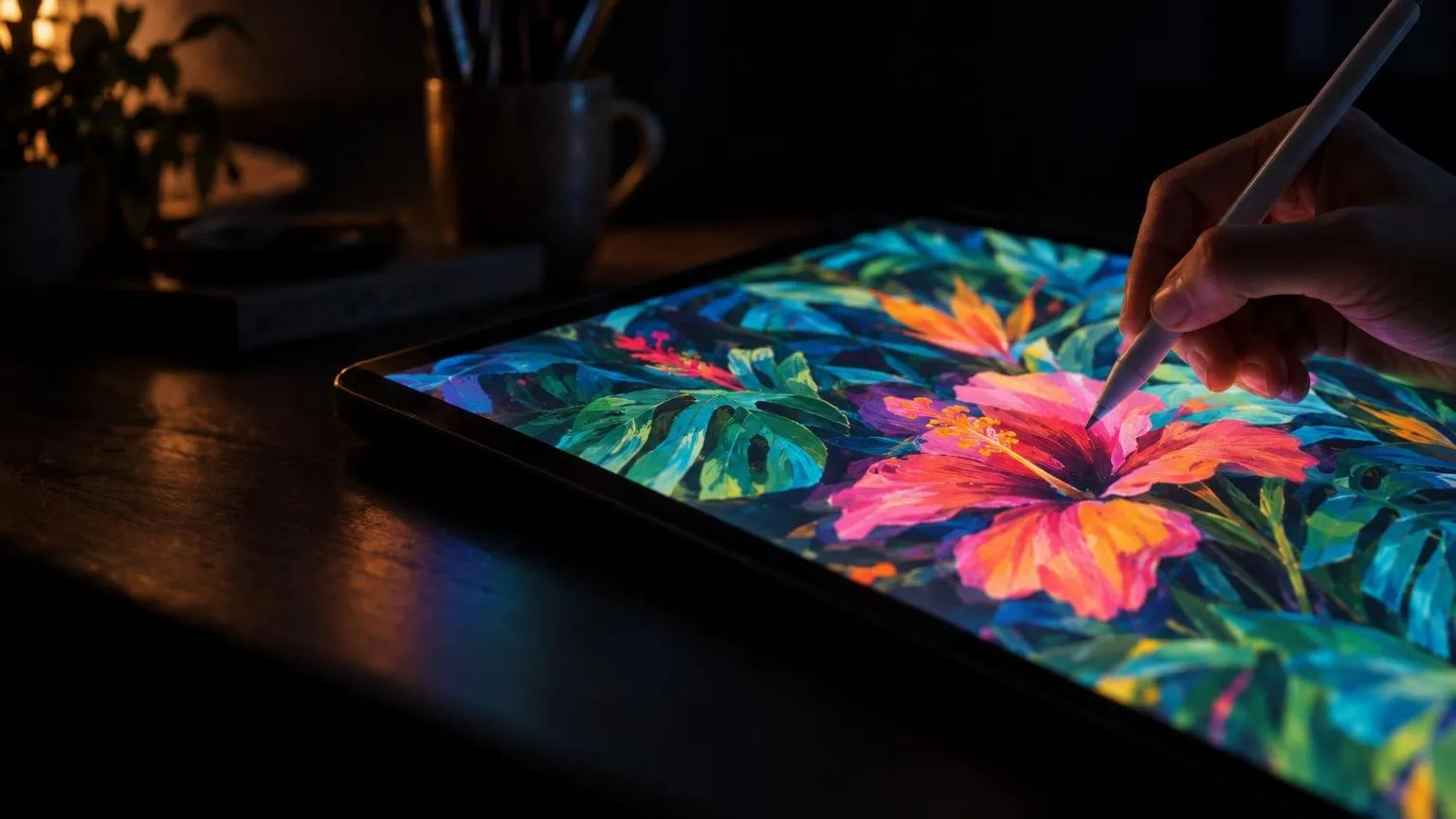
In 1984 Wacom in Japan made a pen that needed no cord, and later a tablet that sensed how hard you pressed. In 2001 its Cintiq put the tablet under the screen. Then, on 3 April 2010, the iPad went on sale from $499, and a drawing surface became something millions of people already owned.
David Hockney began drawing on his iPad as soon as it came out and showed the results in Paris that October, on the devices themselves. Procreate, made by a small studio in Tasmania, launched in March 2011. In 2015 the Apple Pencil added pressure and tilt for $99.
2021Online
Pixels at auction, pictures from text
Two years changed what a digital picture is worth and who, or what, can make one.
paid at Christie's on 11 March 2021 for Beeple's “Everydays: The First 5000 Days”
the opening bid in that sale two weeks earlier
text-to-image systems released within five months of 2022: DALL-E 2, Midjourney and Stable Diffusion
The Beeple sale made digital art front-page news and put its author among the most expensive living artists. A year later, anyone could type a sentence and get a picture back.
Neither event changed the oldest fact in this story. From Sketchpad to the tablet, each new tool made it easier for a person to make a mark and see it at once. That is still the reason to pick one up.
2026Your pocket
Now it is your turn
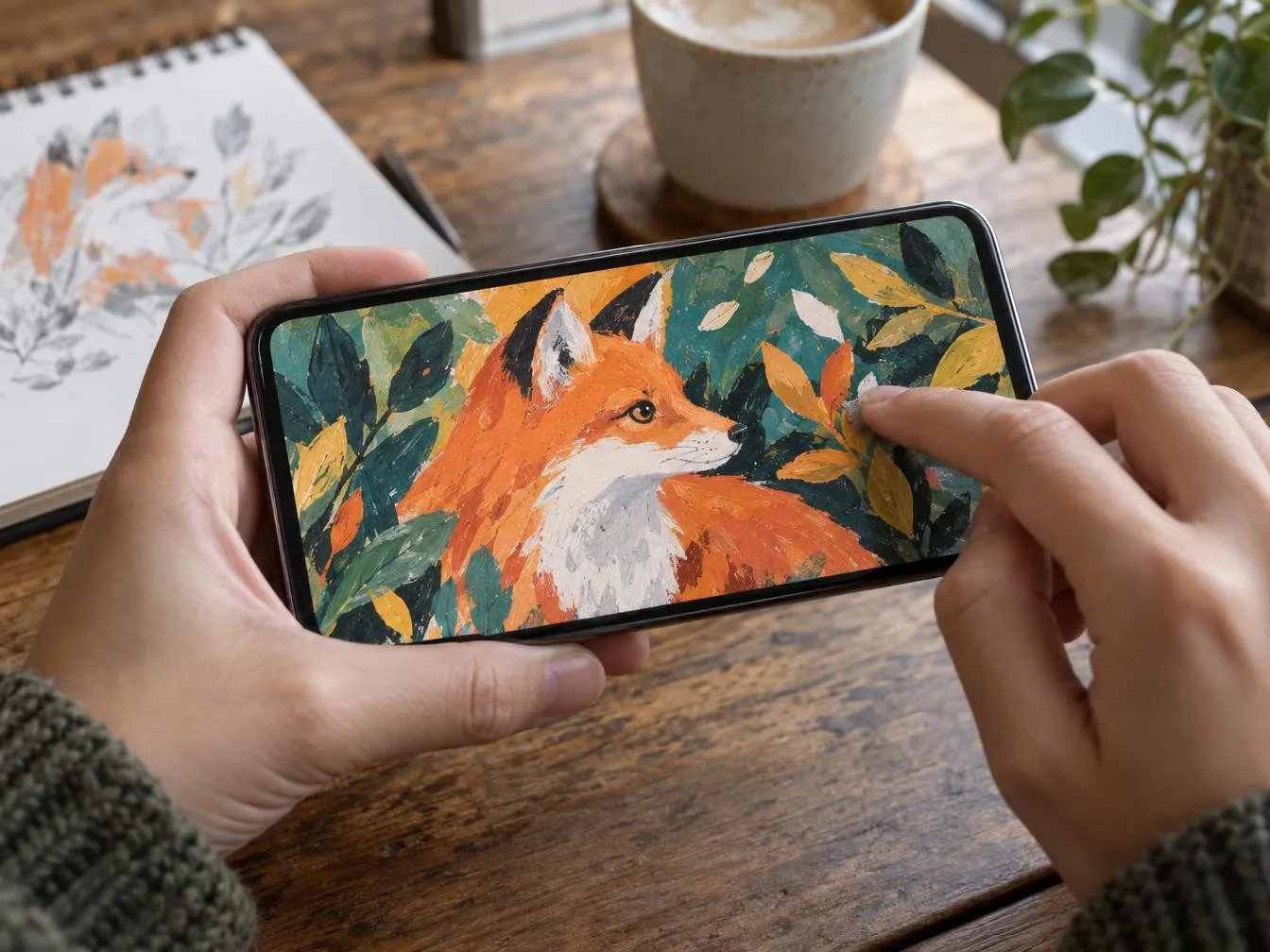
Seventy years of invention fit in a phone. The brushes, the layers and the undo are all there.
 Sketchar
The Sketchar canvas
- BrushesPencil, marker and paintbrush, each with its own settings.
- SmoothingSteadies a shaky line as you draw it.
- LayersUp to ten. Move, hide and merge them.
- AR previewSee the finished drawing on a real wall or sheet through the camera.
Sketchar is a drawing app for iPhone and Android. Its canvas is built for people who are starting out: the tools above without the menus of a professional program. When the drawing is done, you can share it with the Sketchar community or take part in an art challenge.
Illustration made for this page.
Keep reading
- A guide to pixel artWhere to start with the oldest digital style.→
- Sketchar's new brush systemThe brushes behind the Sketchar canvas.→
- Introducing the new canvasThe Sketchar canvas, rebuilt.→
- Introduction to concept artWhat concept art is and how to start practicing.→
- The history of augmented realityFrom a prism over paper in 1806 to AR drawing on your phone.→
- 40,000 years of art, in one scrollFrom cave hand stencils to AR, with paintings you can touch.→
Questions about digital art
Digital art is art made with a computer and stored as numbers instead of pigment: pictures drawn on a screen, generated by code or painted with a stylus.
Digital art began in the early 1960s, when people first programmed digital computers to draw. Ivan Sutherland's Sketchpad dates from 1963 and the first gallery exhibitions of computer art from 1965. Ben Laposky's analogue Oscillons, from about 1952, came a decade earlier.
Georg Nees held the first public exhibition of computer art in Stuttgart in February 1965. A. Michael Noll and Frieder Nake exhibited the same year. Ben Laposky's oscilloscope photographs of the early 1950s are the analogue forerunner.
Sketchpad, written by Ivan Sutherland at MIT and described in his 1963 thesis. The user drew lines and arcs on the screen with a light pen.
The first complete paint system was SuperPaint, built by Richard Shoup at Xerox PARC in 1972 and 1973. Joan Miller wrote a simpler three-bit paint program at Bell Labs in 1969 and 1970.
Thomas and John Knoll started the program in 1987 under the name Display. Adobe released Photoshop 1.0 for the Macintosh on 19 February 1990. Layers were added in version 3.0 in 1994.
A raster image is a grid of coloured pixels and loses sharpness when enlarged. A vector image is described by lines and curves and stays sharp at any size.
A drawing app with a canvas, brushes and layers. Sketchar for iPhone and Android has a canvas with pencil, marker and paintbrush, line smoothing and up to ten layers.