Short answer: graffiti is writing – your name, in letters, in a style, for other writers to read. Street art is picture-making in public – images, characters, stencils, paste-ups, made for whoever walks past. A mural is simply a large painting on a wall and can belong to either world, or to neither. The difference is not the spray can, the wall or the law. It is who the work is for.
I have been painting walls for more than twenty years, from spray pieces the size of a door to commissioned murals the height of a building. I have been on both sides of the line this article is about. Here is where I think it runs.
– Andrey Adno, artist and founder of Sketchar Inc.
Graffiti: letters, names and the people who read them
Graffiti as we use the word now comes out of Philadelphia and New York in the late 1960s and 1970s: a name, written as many times and in as many places as possible, and then written better than anyone else's. The subject of graffiti is the letter. Tags, throw-ups, pieces and wildstyle are all stages of the same thing – a name made harder to read and more rewarding to decode.
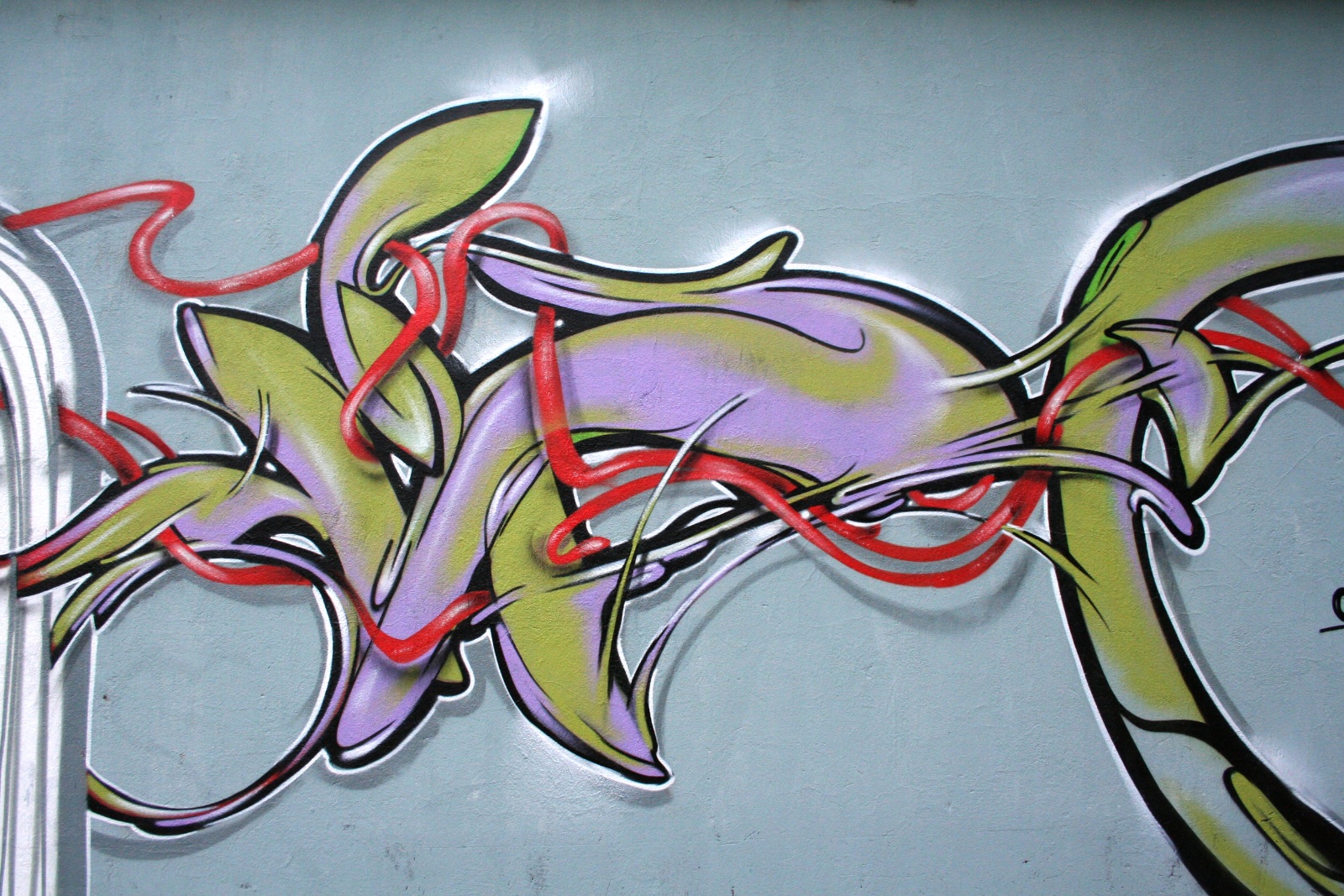
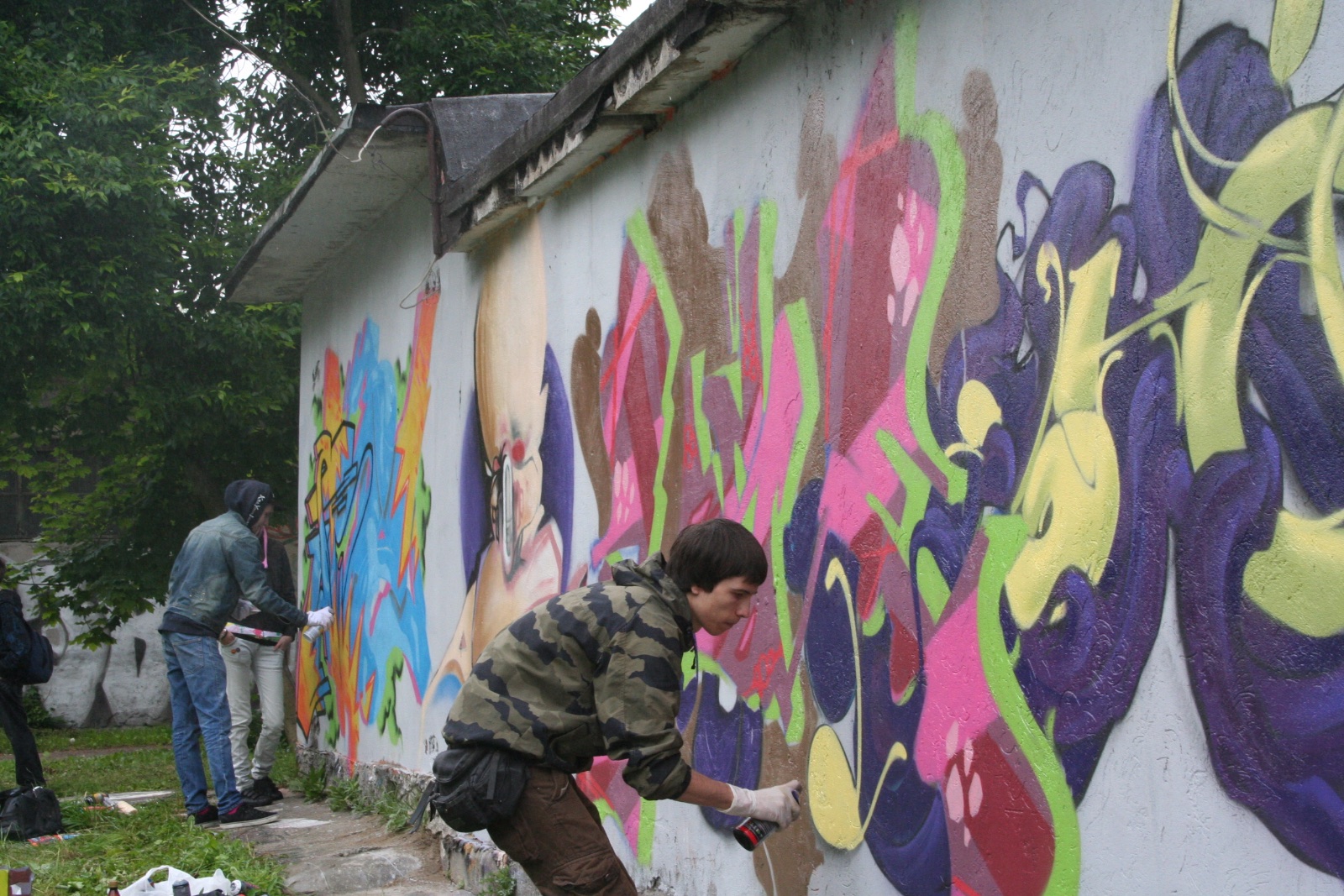
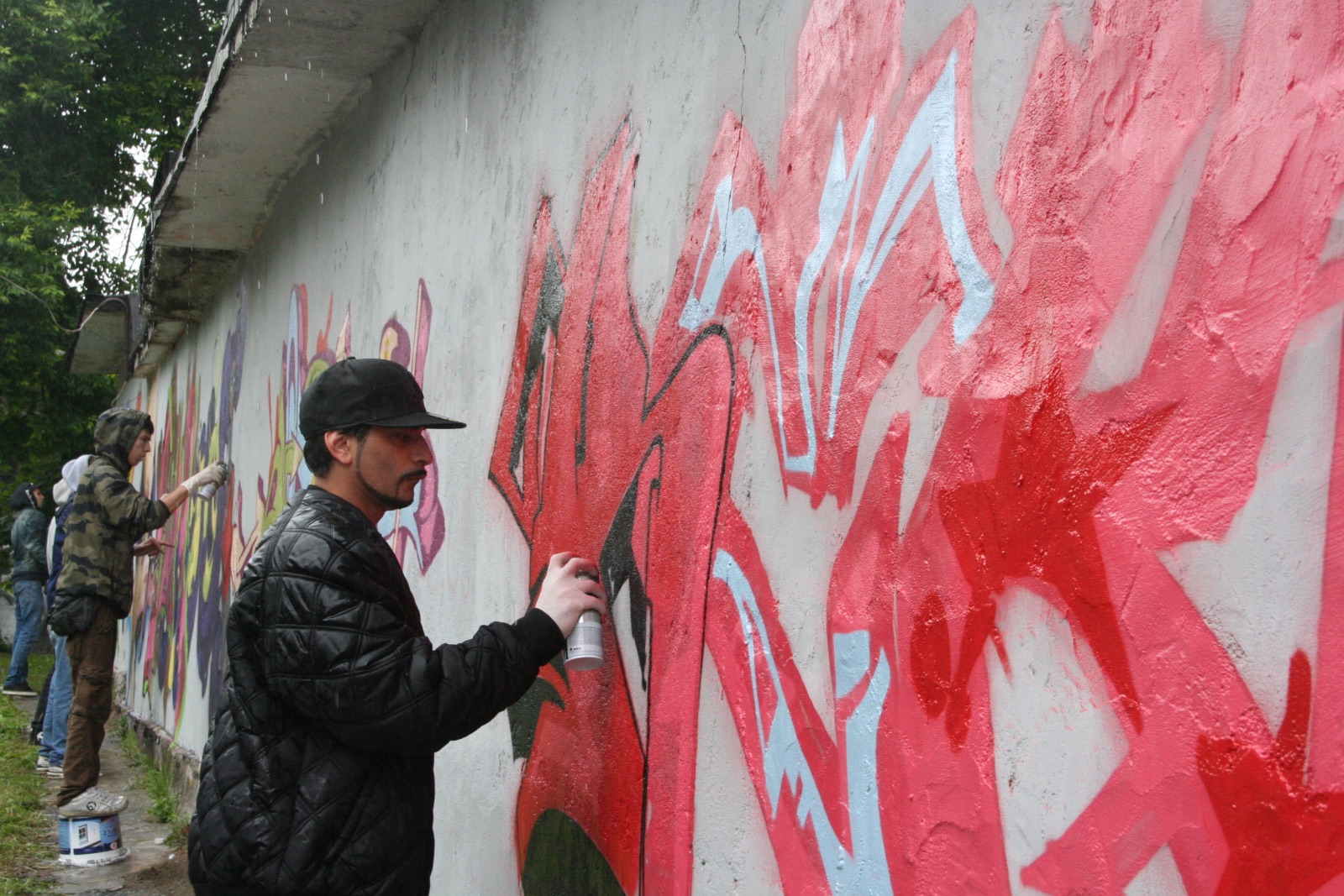
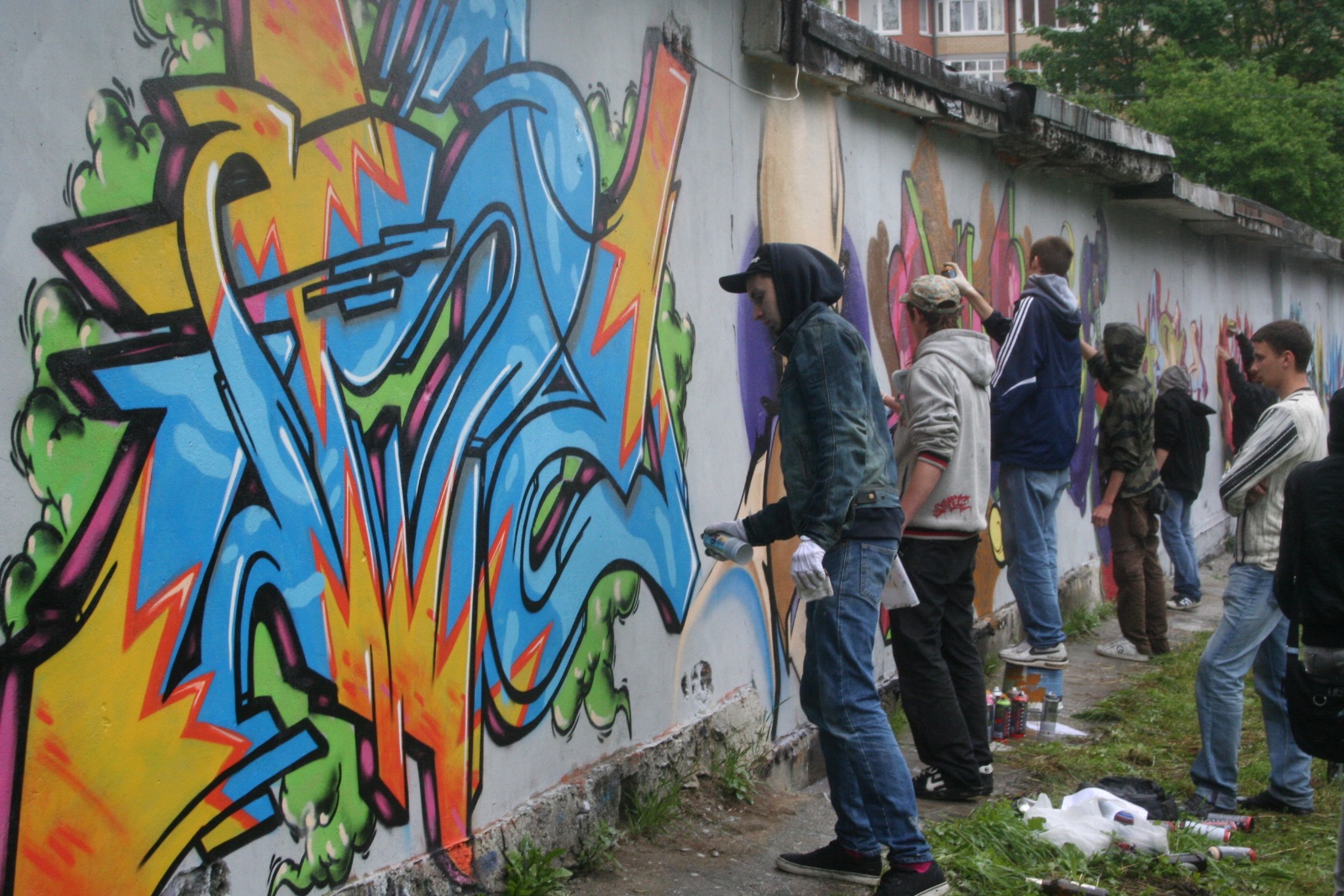
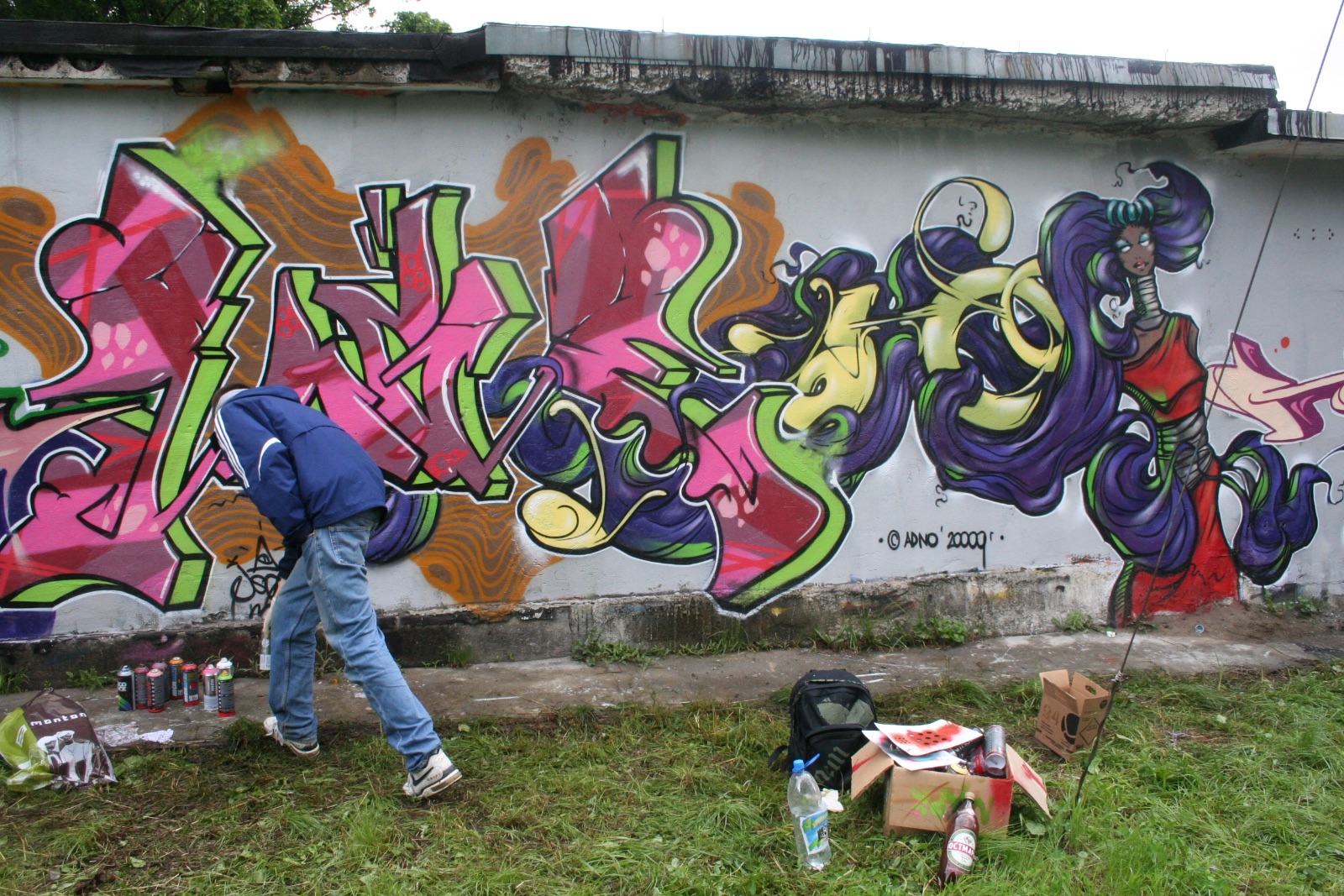
The audience is other writers. A piece on a train line was never meant for the commuters; it was meant for the writer in the next borough who would see it and know who had been there. That is why so much graffiti is unreadable to the public: it was not written for them.
Most of it is unsanctioned, and that is part of the point, but not the definition. Legal walls, jams and commissioned lettering are still graffiti if the subject is the letter and the audience is the scene.
Street art: images, made for the street
Street art came after, and partly out of, graffiti – writers who started adding characters, and artists from outside the scene who saw walls as a place to put pictures. By the late 1990s and 2000s it was its own thing: stencils, paste-ups, stickers, murals, installations. The subject is an image or an idea. The audience is everyone.
That changes the rules. A street artist wants the work read, so it is readable. It is placed where people look, at the height people look, and it often responds to the building or the street around it. Humour, politics, portraits, pattern – the content is open in a way graffiti's is not.
Street art can be illegal too, and some of the most famous of it was. But it moved toward permission faster than graffiti did, because an artist who wants a big audience wants a big wall, and big walls come with owners.
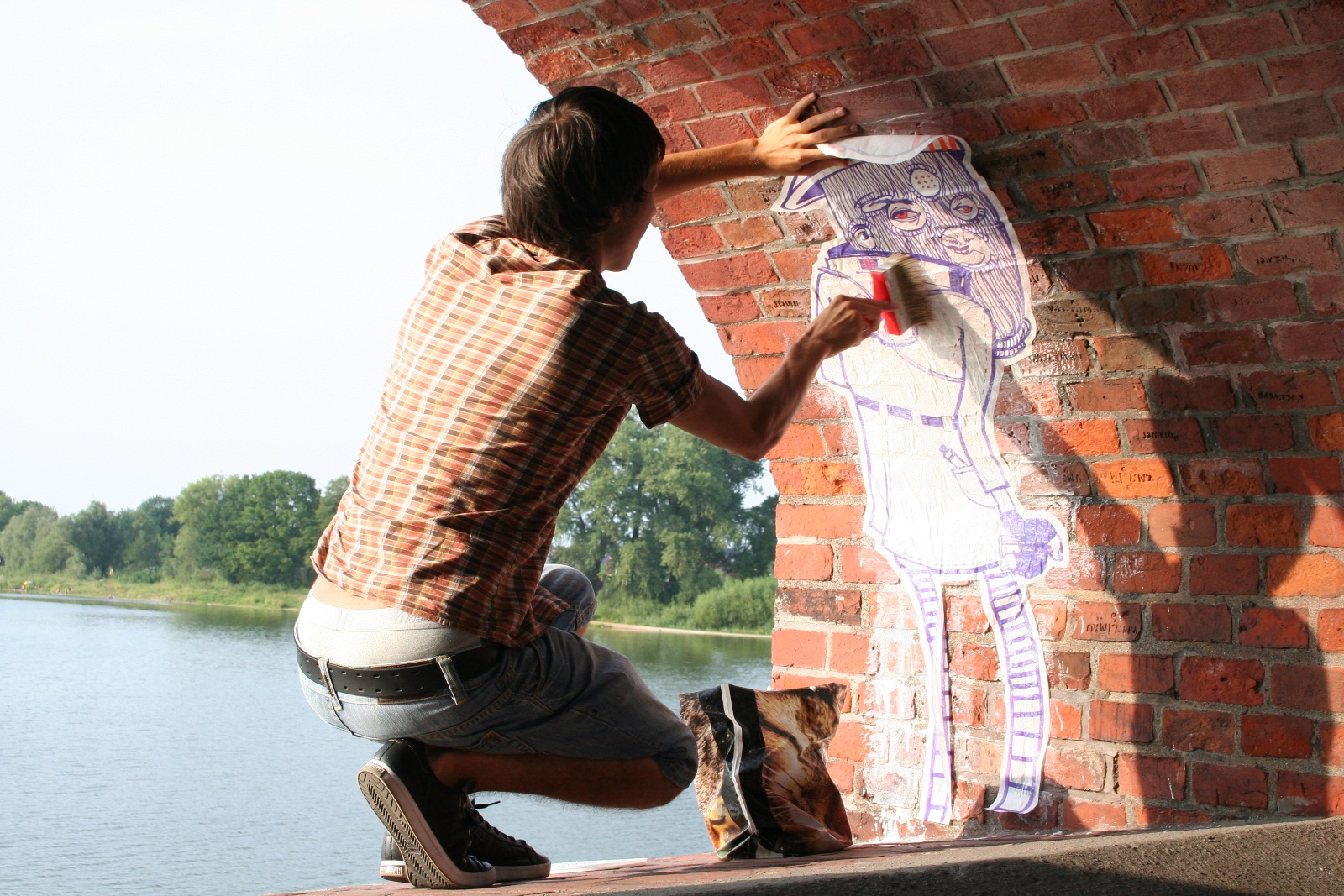
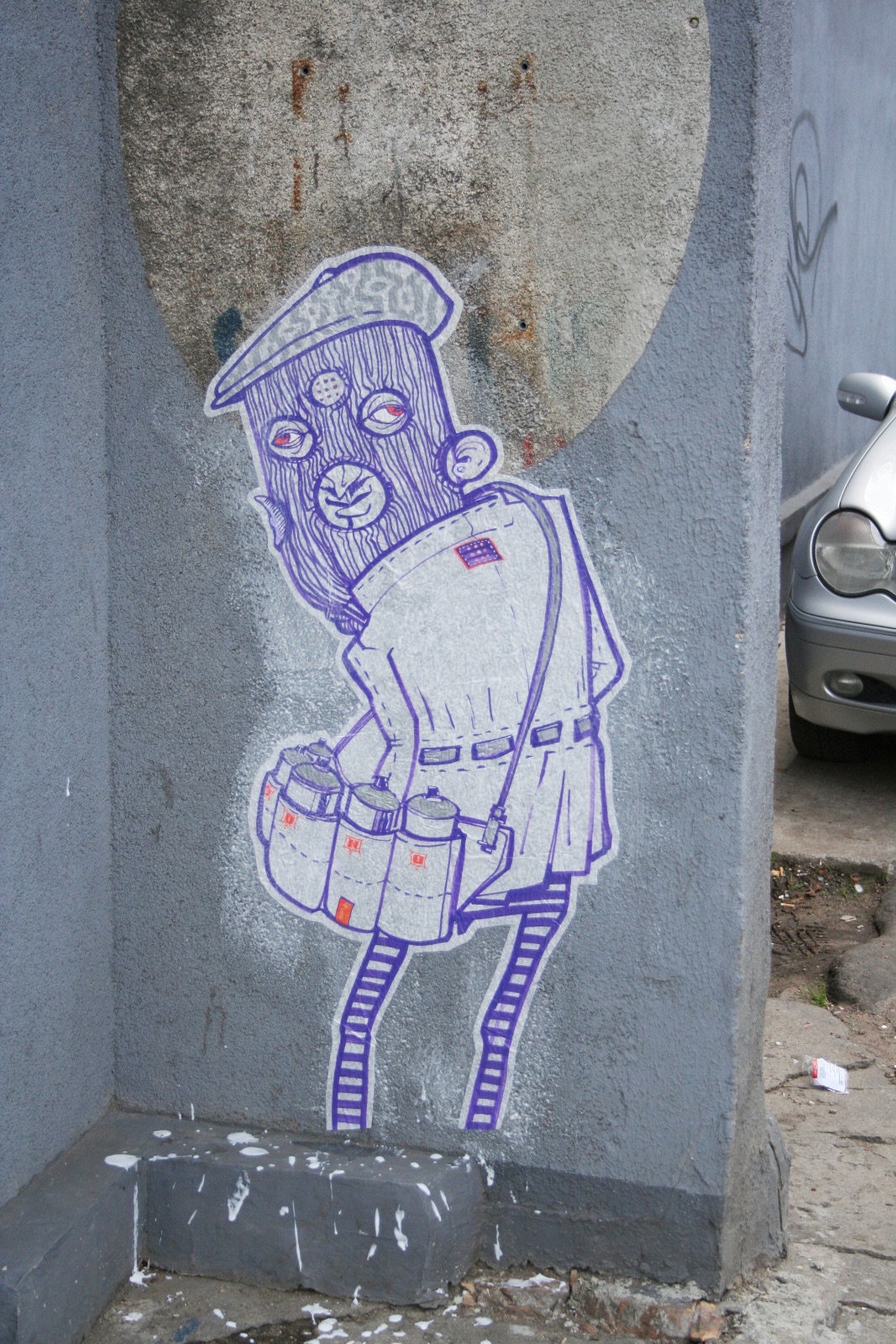
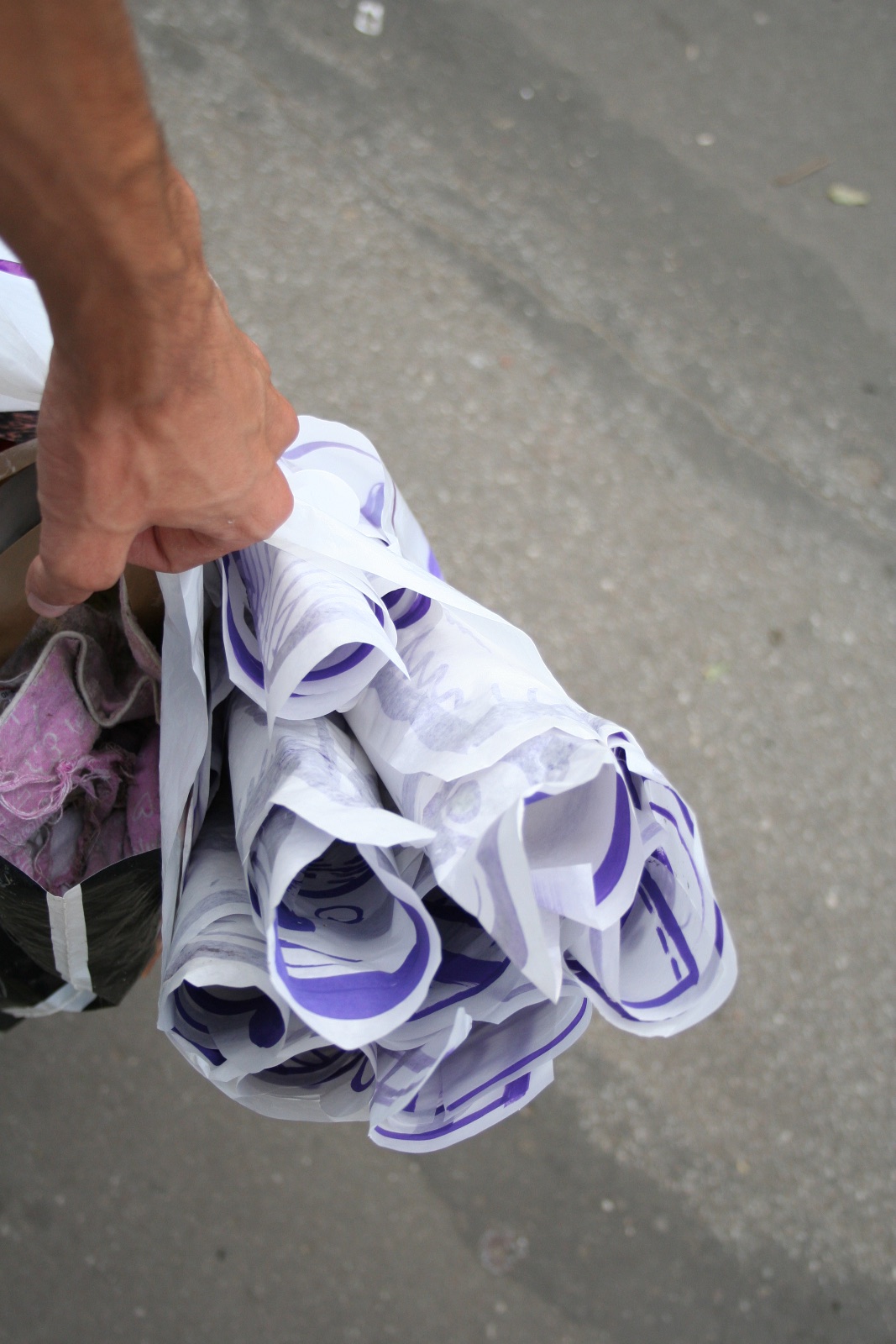
Andrey Adno, city posters, 2009
Where the line actually is
Graffiti | Street art | |
|---|---|---|
Subject | Letters, the name | Images, ideas |
Audience | Other writers | The public |
Measure of success | Style, placement, respect in the scene | Being seen, understood, remembered |
Typical tools | Spray can, markers | Anything: spray, brush, roller, stencil, paper, tiles |
Permission | Usually without; legal walls exist | Both; increasingly commissioned |
Relationship to the wall | The wall is a surface | The wall is often part of the work |
Two things people get wrong. First, the tool does not decide: a spray-painted portrait is street art, a brush-painted name is graffiti. Second, legality does not decide either: a permitted piece is still graffiti, an illegal stencil is still street art. Ask who the work is for and most of the ambiguity goes away.
So what is a mural?
A mural is a large painting applied directly to a wall or ceiling. The word is older than both scenes by a few thousand years – cave paintings, Pompeii, the Mexican muralists of the 1920s and 1930s. A mural can be graffiti if it is a wall of letters. It can be street art if it is a public image. It can be neither: a commissioned painting in a hotel lobby is a mural, and no one would call it street art.
In practice, "mural" has become the neutral word for what both scenes do when they get a big wall and permission. It describes the format, not the culture.

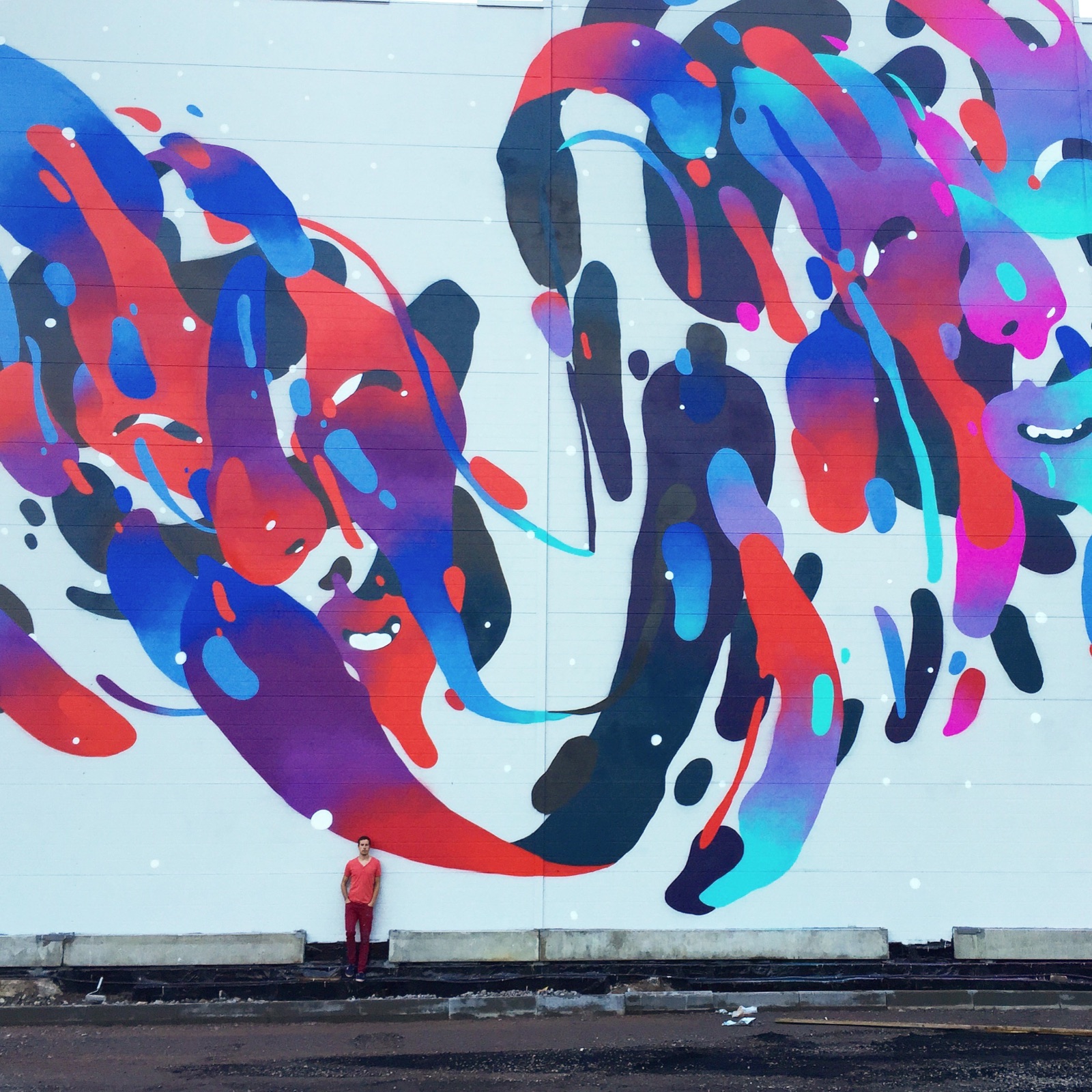
Andrey Adno, 2013/2016
What painting both taught me
Graffiti taught me the things no art school teaches: speed, how to hold a can, how to read a wall from across the street, and how to finish when the light is going. Letters are the hardest drawing there is – every stroke is a shape and a line at once, and every writer in the city can see where you went wrong.
Street art, and then murals, taught me the opposite set: how to plan a piece that a crane operator, a building owner and a passer-by will all understand, how to scale a drawing to twelve metres without losing the gesture, and how to keep a composition alive when it takes a week instead of a night.
The scaling problem is the one that followed me into building Sketchar. On a night piece you draw from memory and fix it as you go. On a commissioned wall you have a sketch that was approved and a client who expects to see it, at size, on the wall. Writers solved that with the eye; muralists solved it with grids, projectors and, now, a phone or a headset that shows the sketch on the wall in daylight. The methods, honestly compared, are in How to scale a mural, and Konstantin Zmogk, a writer with 25 years in graffiti, talks about trying them in this interview.
Does it matter which you call it?
To the person commissioning a wall, yes. "Graffiti" to a property owner often means damage; "street art" means a photo opportunity; "mural" means an invoice. Use the word your client uses and explain the rest later.
To the people making the work, it matters more than outsiders expect. Writers have a scene with its own rules and its own history, and being called a street artist is not always a compliment. Street artists have their own, and so do muralists. Respect the vocabulary of whoever's wall you are standing in front of.
For everyone else: look at the wall. If you can read it, it was probably made for you.
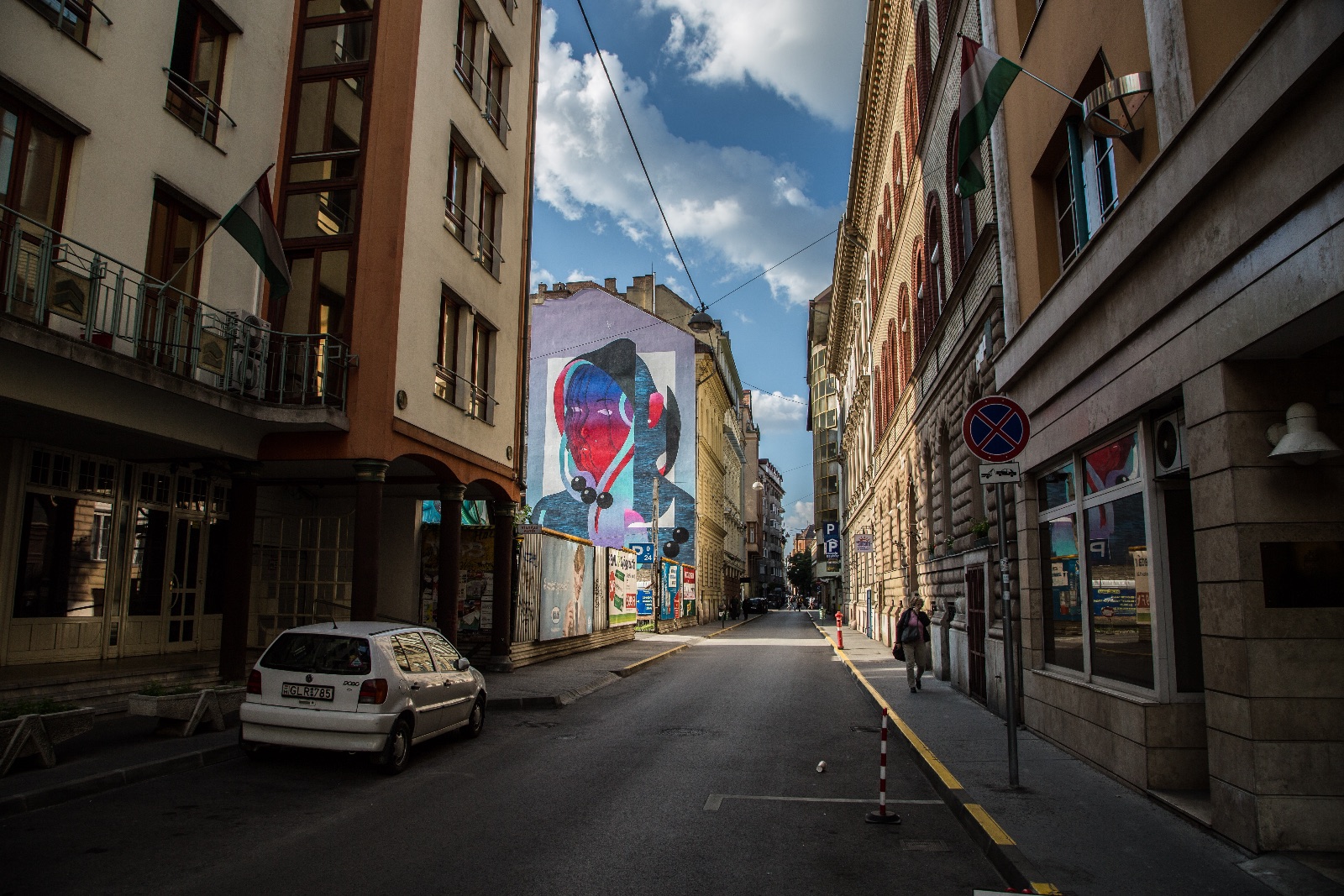 Andrey Adno, Budapest, 2016
FAQ
Is graffiti considered street art? Graffiti came first and street art grew partly out of it, but writers generally treat them as separate cultures. Graffiti is letter-based and made for the scene; street art is image-based and made for the public.
Is street art illegal? It depends on the wall and the city. Unsanctioned work is illegal almost everywhere; commissioned and permitted work is not. Much of today's street art is painted with permission.
What is the difference between a mural and street art? A mural is a format – a large painting on a wall. Street art is a practice – image-making in public. Many murals are street art; many are not.
Is Banksy graffiti or street art? Street art. The work is image-based, aimed at the public and built around ideas. Its illegality is incidental to the category.
How do mural artists get their designs onto big walls? A grid, a projector at night, or AR/VR in daylight. Each has a cost in time and accuracy, and most professionals use more than one depending on the wall. The step-by-step process is in How to paint a mural on a wall.
Whatever you call it, the sketch has to get onto the wall. Sketchar puts it there through a phone or a headset, in daylight, at size. See how muralists use it
▋