Window painting: how to paint shop windows and glass – materials, layout and a short history
What paint to use on windows and how to get it off, inside or outside the glass, freehand or layout, how shop windows were painted then and now, and how Sketchar on Meta Quest puts your sketch on the glass.

Short answer: for a window that has to come off after the season, paint with tempera or poster paint mixed with a drop of dish soap, and draw lines and lettering with water-based paint markers such as Posca or liquid chalk markers; all of them wash off with warm soapy water. Clean the glass first, decide whether you paint from the outside (reads the right way round, but the rain gets to it) or from the inside (protected, but the design has to be mirrored), then get the design onto the glass: freehand, with a printed template taped to the other side, with a grid, or with an AR overlay. On a big shop window, Sketchar on Meta Quest puts the sketch straight onto the glass in daylight, so you trace it instead of measuring it.
A short history of window painting
Shop windows became a canvas once glass got big. From the middle of the 19th century, large panes of plate glass turned the shop front into a display, and sign writers started lettering and gilding the glass itself. The most prized work was gold leaf laid on the back of the glass (verre églomisé), so the letters shone through from the street; Victorian shops made it an art form, and sign writers still restore those windows today.
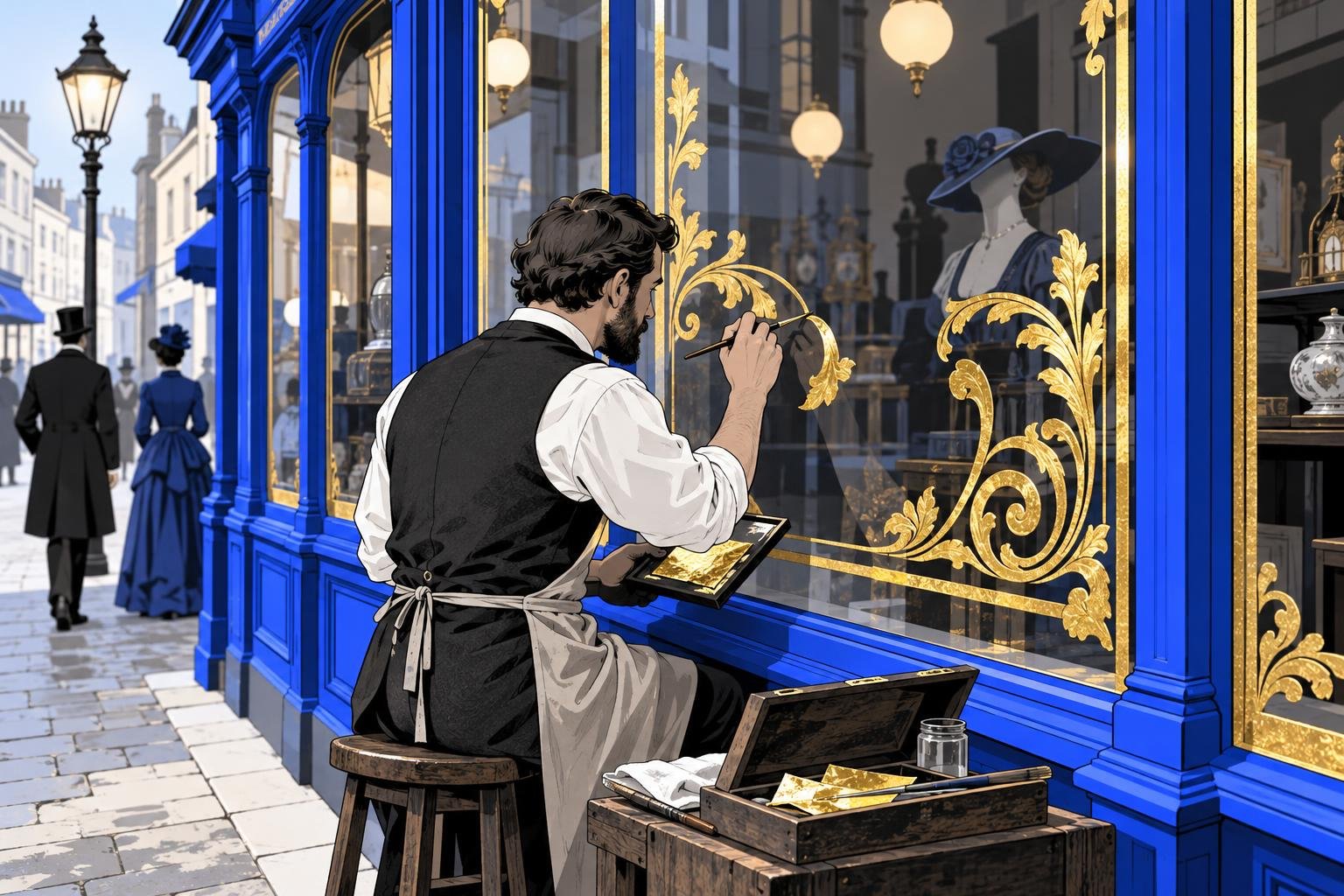
Seasonal painting came later and from a different place. In the late 1940s and 1950s, merchants in American towns were tired of scrubbing soap and wax off their windows after Halloween pranks. Towns such as Midvale, Utah (1950) and Beacon, New York (1951) gave the windows to local kids instead, with paint, prizes and a contest. Some of those contests never stopped: in Rye, New York, children painted more than 400 windows in 2025, the 72nd year of the event. The same idea now runs through Christmas, Lunar New Year, Easter and every shop opening.
Materials for painting on glass
Tempera or poster paint. The standard for seasonal windows: cheap, bright and removable with water. Mix in one drop of dish soap per colour and keep it about as thick as heavy cream; the soap helps it go on smoothly and come off cleanly.
Water-based paint markers. Posca and similar pens are the window artist's favourite for outlines, lettering and fine details. A white marker is the one to buy first.
Liquid chalk markers. Good for quick sketches, menus and layout lines; they come off with soap and warm water.
Acrylic paint. Semi-permanent. It survives longer, but removal means scraping, which can damage coated or tinted glass. Use it only on glass you own and for work that should stay.
Sign-writing enamel and gold leaf. For permanent shop lettering, painted or gilded on the inside of the glass by a sign writer.
Tools. Flat and round brushes, sponges for gradients, painter's tape, glass cleaner or isopropyl alcohol, paper towels, and a plastic scraper for clean-up.
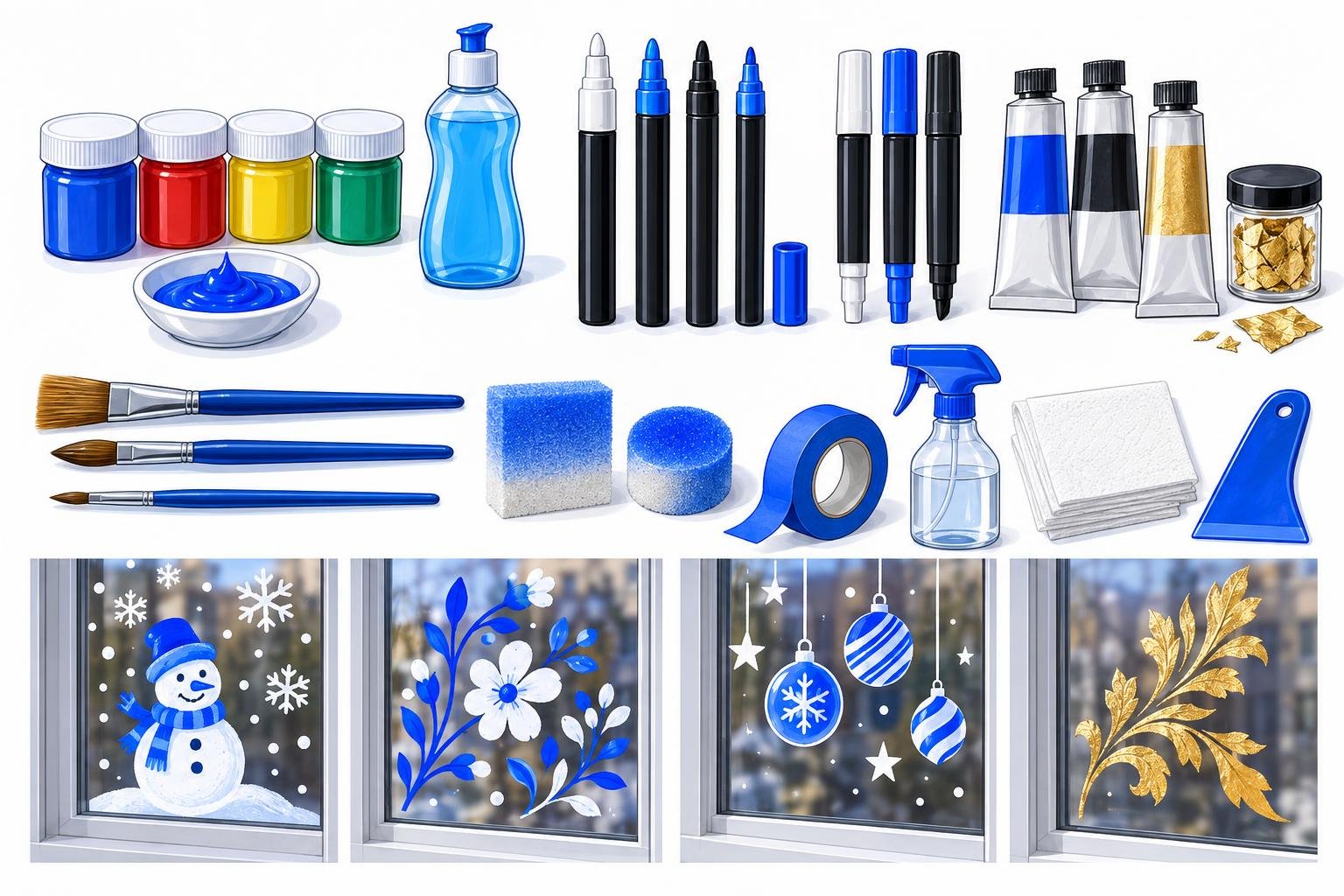 Before you start a whole window, test your paint on a corner: some glass has coatings or film on it, and you want to know that the paint comes off before it covers six square metres.
Inside or outside the glass
Outside. The design reads the right way round, you paint it as you see it, and passers-by watch it happen. But rain and frost wash water-based paint away, so outside work suits short campaigns and sheltered windows.
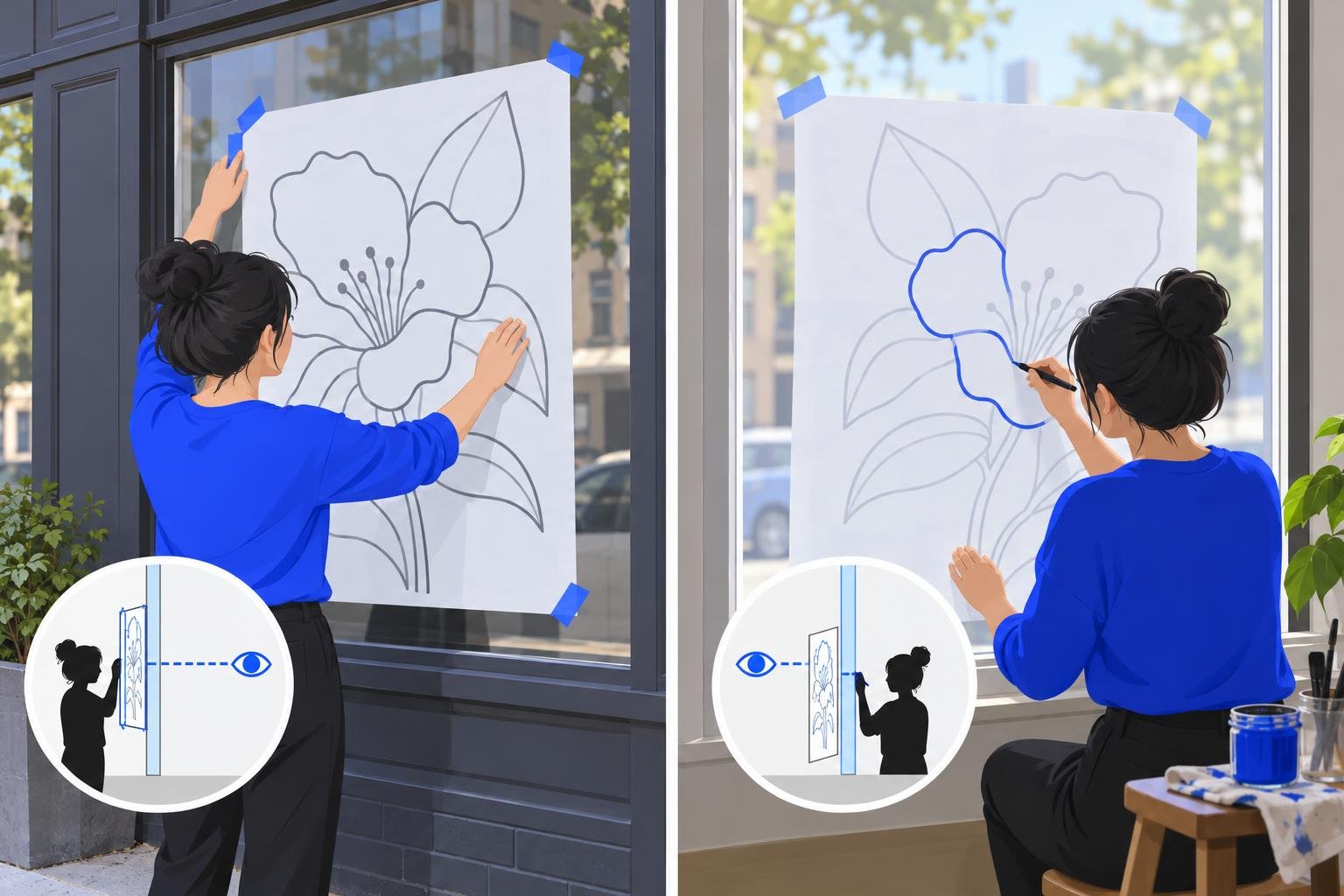
Inside. The paint is protected and lasts the whole season, which is why most shop windows are painted from inside. The catch: everything is mirrored. Text and anything directional have to be painted back to front, and you work in reverse order: lines and details first, big fills on top of them, because the street sees the layer that touches the glass.
On a window, the last brushstroke you make is the first thing the street never sees.
Freehand or layout: how the design gets onto the glass
There are two schools. Experienced window painters often go freehand: a few chalk-marker guidelines, then straight to the brush. It is fast and loose, and seasonal art can take a bit of wobble. Lettering, logos and anything that has to match a brand need a layout first:
Template behind the glass. Print the design at full size, tape it to the other side of the window facing you, and trace it. If you paint from inside, tape a normal print to the outside, facing in: you see it mirrored, trace it, and the street sees it the right way round. It works well for small and medium windows, but printing a 4-metre template is a job in itself.
Pounce pattern. The sign writer's classic: prick holes along the lines of a paper pattern, hold it to the glass and tap a bag of chalk or charcoal over it. The dotted outline stays on the glass to paint over.
Grid. Mark a grid on the glass with a chalk marker and copy the design square by square. Cheap and accurate, slow on a large window.
Projector. Works indoors at night, but clear glass barely catches a projected image, so you usually need paper or film behind it. Read more in our mural projector guide.
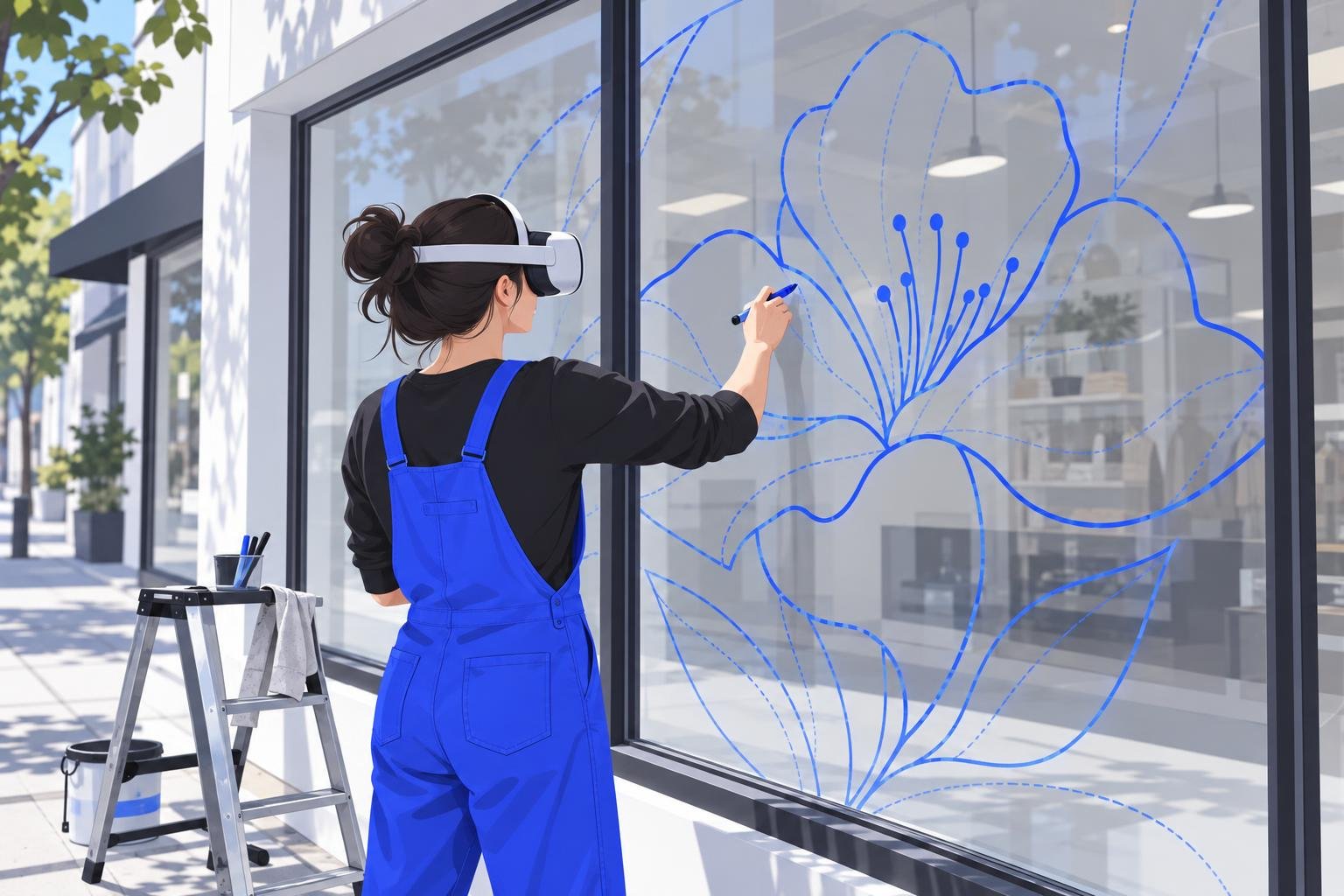
AR and VR overlay. The design is anchored on the glass in an app, and you trace it in daylight. On a phone, AR drawing works for small windows; for a whole shop front, a headset frees both hands. More on this below.
How to paint a shop window
Step 1 – Plan the design for the window
Measure the glass and take a straight-on photo of it. Sketch on top of the photo, so the design fits the frames, the door and the shop's sightlines. Keep the shop's name and the most important message at eye level, and leave clear areas so people can still see inside.
Step 2 – Clean the glass
Wash the window, then wipe it with glass cleaner or isopropyl alcohol so no grease is left. Paint does not stick to fingerprints. Let it dry completely.
Step 3 – Put the design on the glass
Choose the method that fits the window: freehand guidelines with a chalk marker, a template taped to the other side, a grid, or an AR overlay. If you paint from inside, mirror the design now, before you trace anything.
Step 4 – Draw the outlines
Go over the main lines with paint markers. Outside, outlines come last as a finishing touch if you prefer; inside, they go first, because they have to sit on top when seen from the street.
Step 5 – Fill the colours
Fill the large areas with tempera or poster paint, working from the lightest colours to the darkest. Thin coats dry faster and crack less than one thick one; add a second coat where the light still shows through.
Step 6 – Take it off when the season ends
Soak the paint with warm soapy water, let it soften for a few minutes, then wipe it off and finish with a plastic scraper and glass cleaner. Book the removal into the price when you quote a client; for pricing a job, see how much to charge for a mural.
Window painting then and now
Then. A sign writer arrived with brushes, a mahl stick to steady the hand, a pounce pattern and gold leaf. Lettering was laid out by eye and by measuring, painted in reverse from inside the shop, and a gilded window could stay for decades. Seasonal windows were the work of kids with poster paint and one weekend before Halloween.
Now. Much of the everyday signage moved to printed vinyl and film, and hand painting became the special thing again: Christmas windows in cafes, Lunar New Year windows in restaurants, opening-day windows for new shops. Paint markers made clean lines easy, and the slowest part of the job, getting the design onto the glass at the right size, is where technology changed the most.
Painting a window with Sketchar on Meta Quest
Sketchar on Meta Quest is a mural app built by muralists, and artists already use it on glass shop windows, not only on walls.
It works the same way on a window as on a facade:
Sync your sketch. Send the design from the Sketchar mobile app to the headset. If you paint from inside, flip the image before you send it.
Place it on the glass. Put the sketch on the window, then scale, move and rotate it until it sits exactly inside the frame. For a long shop front, the fast-move mode sets the height of a large image in seconds.
Make it readable. Turn down the opacity, remove the white background, or invert dark lines into light ones, which helps when the shop behind the glass is dark.
Plan a row of windows. Collage Mode places up to 10 images at once, so you can see the whole shop front in scale before you paint a single pane.
Paint in daylight. There is no projector to wait for and no grid to measure. You see the lines on the glass and trace them with your own markers and brushes.
Work as a team. With Sketchar Multiplayer, several painters see the same sketch in the same place, so a team can split a long shop front between them and still match up at the joins.
New to the headset? Start with the Sketchar on Meta Quest beginner guide and check which VR headset you need. For walls rather than glass, see how to paint a mural on a wall.
FAQ
What paint do you use on windows? For seasonal art, tempera or poster paint with a drop of dish soap, plus water-based paint markers for lines and lettering. For permanent lettering, sign-writing enamel or gold leaf on the inside of the glass.
Does window paint come off? Tempera, poster paint, Posca-type markers and liquid chalk come off with warm soapy water and a plastic scraper. Acrylic is much harder to remove and can damage coated glass.
Can you use acrylic paint on windows? Yes, but treat it as semi-permanent. Use it only on glass you own and test removal on a corner first.
Do you paint shop windows from the inside or the outside? Mostly from the inside, where the paint is protected from rain. The design then has to be mirrored and painted in reverse order: lines first, fills on top.
How do you transfer a design onto a window? Freehand with chalk-marker guidelines, with a full-size template taped to the other side of the glass, with a pounce pattern, with a grid, or with an AR overlay such as Sketchar.
Can I use Sketchar to paint a window? Yes. Sketchar on Meta Quest places your sketch on the glass in daylight, and on a phone, Sketchar AR drawing works for smaller windows.
How long does window paint last? Painted from inside, tempera and poster paint usually last the whole season. Outside, rain can wash them off within days.
Put your sketch on the glass, not on a grid. Sketchar on Meta Quest projects your design onto any window in daylight. Try Sketchar Mural App
▋